CFA Level 1 Study Notes – Fixed Income
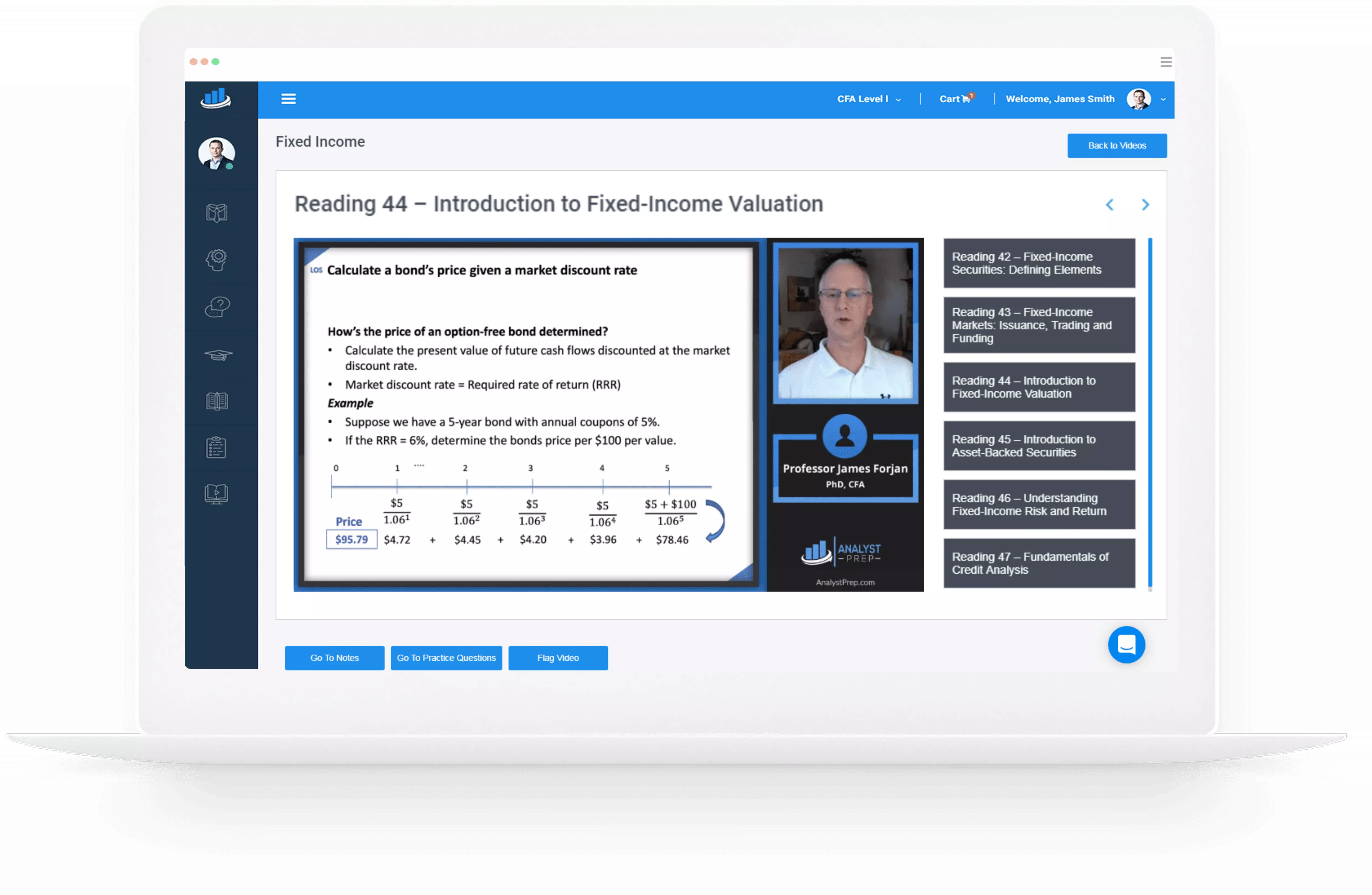
Study Session 14 Reading 42 – Fixed-Income Securities: Defining Elements – LOS 42a: describe basic features of a fixed-income security – LOS 42b: describe content of a bond indenture – LOS 42c: compare affirmative and negative covenants and identify examples…
Learning Sessions – Ethical and Professional Standards
Older Curriculums>>> Ethical and Professional Standards (2024) LM 1 – Ethics and Trust in the Investment Profession LOS a: Explain ethicsLOS b: Describe the role of a code of ethics in defining a professionLOS c: Describe professions and how they establish…
CFA Level 1 Study Notes – Quantitative Methods
2023 Syllabus >>>> 2024/2025 Syllabus Learning Module 1 – Rates and Returns LOS LOS a: interpret interest rates as required rates of return, discount rates, or opportunity costs and explain an interest rate as the sum of a real risk-free…
Standard 1(A) – Knowledge of the Law
I. Professionalism Standard I is broad in scope and directed toward competence within a small business environment. This standard makes it clear high ethical standards must apply even when an issue hasn’t been identified in writing.
Standard I(B) – Independence and Objectivity
Standard I(B) – Independence and Objectivity addresses the issue of gifts, payment, and favors that may compromise one’s objectivity and service to clients. This includes advisors, analysts, and credit raters.
Standard I(C) – Misrepresentation
Standard I(C) – Misrepresentation indicates that CFA members must not knowingly misrepresent information related to investment analysis, recommendations, or professional actions.
Standard I(E) – Competence
Members and Candidates must act with and maintain the knowledge and skills necessary to fulfill their professional responsibilities. Compliance Standard I(E) – competence requires members and candidates to apply and maintain the knowledge, skills, and diligence necessary to deliver a…
Standard II(A) – Material Non-Public Information
II. Integrity of Capital Markets Standard II discusses sharing of material information qualified as non-public, as well as the intent to manipulate markets. It prohibits CFA members from acting in a way to distort market value through manipulation. Standard…
Standard II(B) – Market Manipulation
Standard II(B) – Market Manipulation dictates that members refrain from any activity that will fraudulently manipulate volumes of trading and/or causes a distortion of securities pricing. Compliance Two key attributes of market manipulation are information-based and transaction-based. Information-based manipulation involves…
Standard III(A) – Loyalty, Prudence, and Care
III. Duties to Clients and Prospective Clients Standard III addresses client loyalty, discretion, and care; fair dealing; suitability; performance presentation; and maintaining confidentiality. Investment professionals are obligated to put the interests of their clients before that of their organization or…