


CFA® Level II Question Bank with 1,200 Exam-Style Practice Questions
CFA Study Materials and Question Bank AnalystPrep offers
Practice with realistic CFA Level II item sets, detailed answer explanations and hard vignette-style questions designed to help you master the exam format and improve your performance.

Everything You Need to Pass CFA® Level II
Question Bank (Item Sets)
Practice with 1,200+ CFA Level II practice questions organized into realistic vignette-style item sets. Each case includes 4–6 questions just like the real exam, helping you build the analytical skills needed for Level II.
Mock Exams
Test your readiness with full-length CFA Level II mock exams that replicate the actual exam format. Identify weak areas, improve time management and track your progress before exam day.
Video Lessons
Watch clear CFA Level 2 video walkthroughs that explain complex topics step by step. Professor James Forjan, PhD, CFA, breaks down difficult concepts so you can understand how they appear in exam questions.
Study Notes
Review concise CFA Level 2 study notes that summarize key formulas, valuation methods and financial concepts across the curriculum. Each note is aligned with the CFA Institute Learning Outcome Statements (LOS).
CFA Level 2 Exam Details
When is the CFA Level 2 exam offered?
CFA Level 2 is offered multiple times per year, typically in May, August and November. The CFA Institute sets registration deadlines several months in advance.
What percent of candidates pass CFA Level 2?
The CFA Level 2 pass rate typically ranges between 40% and 50%. The exam is considered more challenging than Level 1 due to its focus on application and item-set questions.
What topics are covered in CFA Level 2?
CFA Level 2 covers areas such as equity valuation, fixed income, derivatives, financial reporting, corporate issuers and portfolio management. Questions are case-based and require applying concepts across multiple topics.
Why does CFA Level 2 prep matter?
The exam uses item-set questions (vignettes) that test analytical thinking and real-world application. Consistent practice with CFA Level 2 questions and mock exams helps build accuracy, speed and exam readiness.
If you’d like to explore AnalystPrep exam prep materials for free, click here.
How CFA Level II Item Sets Work
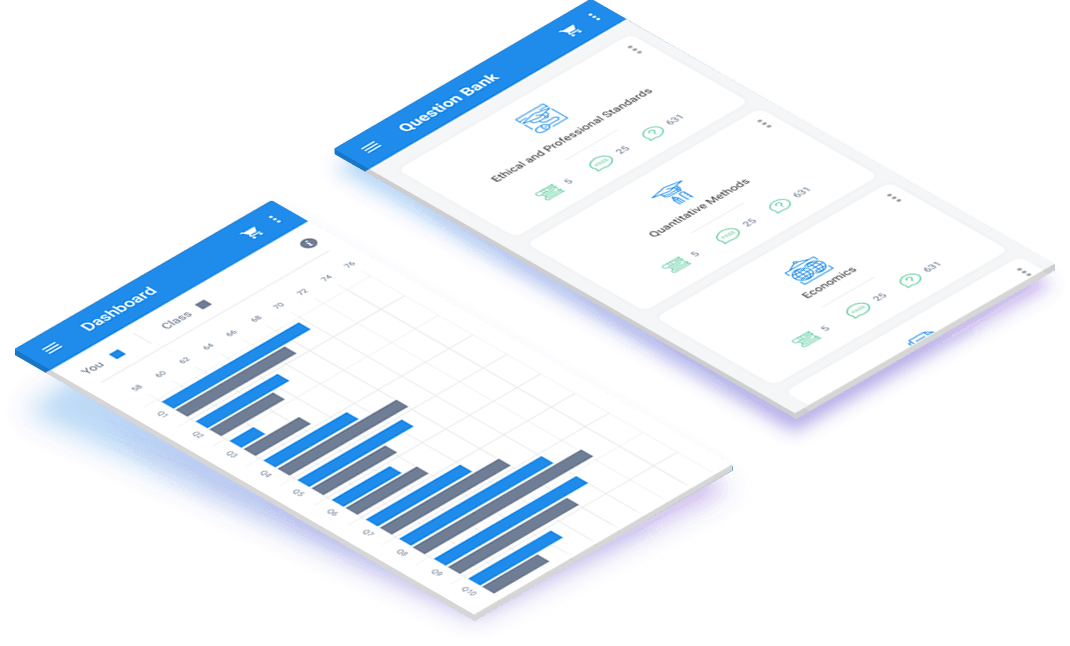
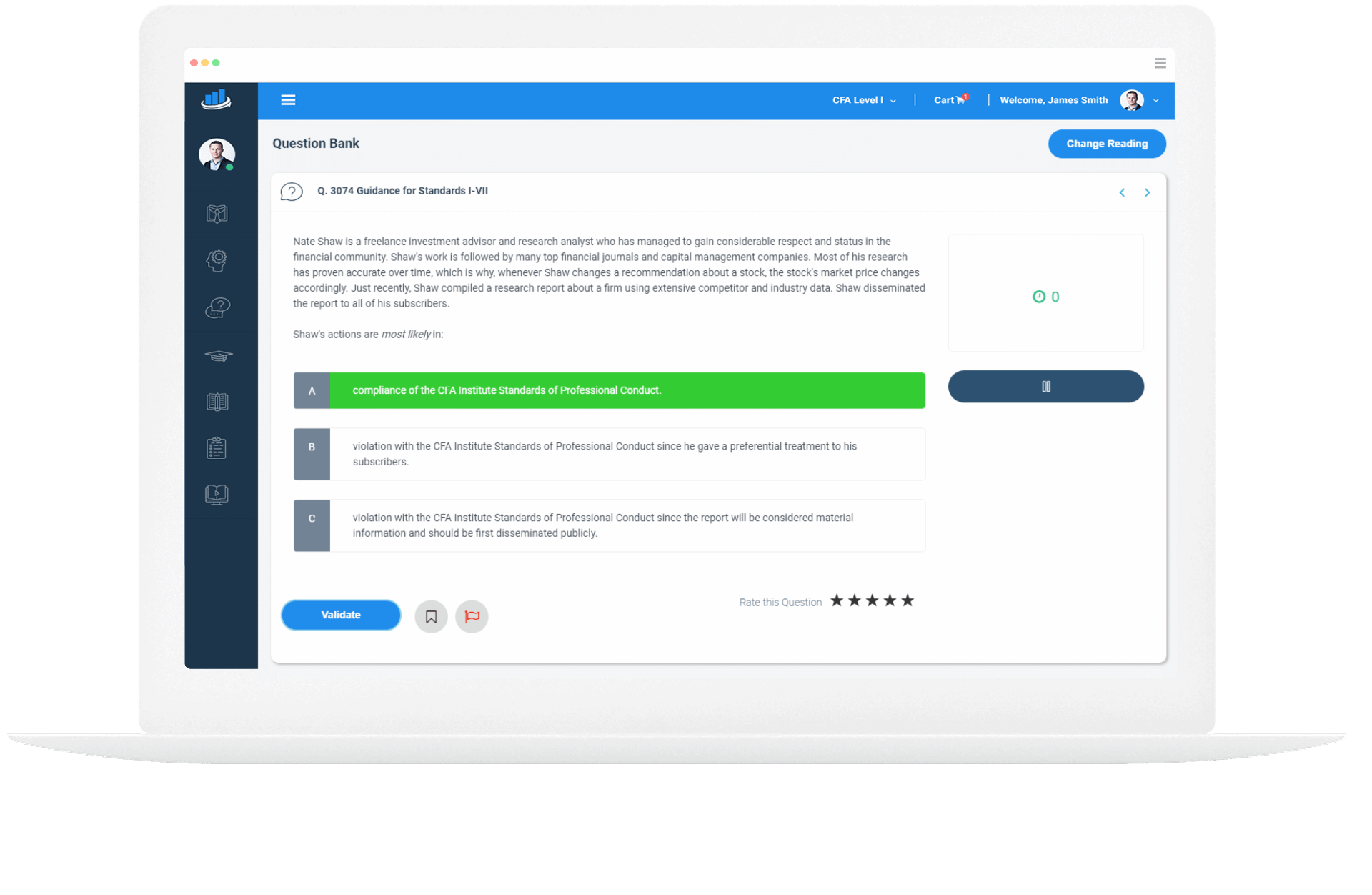
Unlike CFA Level I, where questions are presented individually, the CFA Level II exam uses item sets, also known as vignette-style questions. Each item set begins with a short case study that describes a realistic financial scenario.
The vignette may include financial statements, portfolio data, market assumptions or economic information. After reading the case, candidates answer a series of multiple-choice questions that test how well they can apply financial concepts to the situation.
Each item set contains four to six related questions. Instead of testing isolated facts, the questions require you to analyze the case, interpret the data and apply valuation or portfolio management techniques.
This format reflects how financial analysts work in practice. Rather than solving standalone problems, professionals must evaluate information, connect multiple concepts and make informed investment decisions.
Because of this structure, success on the CFA Level II exam depends heavily on practicing vignette-style questions. Candidates need to become comfortable reading financial cases, identifying key information quickly and applying the correct analytical approach.
| Pro Tip: The best way to prepare for CFA Level II is by practicing item-set questions that closely mirror the exam format, helping you develop both analytical accuracy and time-management skills. |
How Many Item Sets Are on the CFA Level II Exam?
The CFA Level II exam is built entirely around item sets (vignettes) rather than standalone questions.
In total, candidates answer 88 multiple-choice questions, organized into 22 item sets.
Each item set includes:
- One vignette (case study) that describes a financial scenario
- Four multiple-choice questions based on that vignette
The exam is divided into two sessions, each containing 11 item sets (44 questions).
Since every group of questions is tied to a single vignette, candidates must carefully read and interpret the information provided before selecting the correct answer. This structure places a strong emphasis on analytical reasoning and applying financial concepts to real investment cases.
| Pro Tip: Practice solving full item sets rather than isolated questions so you become comfortable analyzing vignettes and answering multiple related questions efficiently. |
Choose Your CFA Level 2 Prep Package
Practice Package
Learn + Practice
Unlimited Package
How to Practice CFA Level II Item Sets Efficiently
Read the vignette strategically
Start by scanning the vignette to identify the key topic being tested. Pay attention to financial data, assumptions and tables that may be referenced in the questions. Avoid trying to memorize every detail. Instead, focus on understanding the structure of the case and where important information is located.
Manage your time carefully
Each item set contains several related questions, so it’s important to move efficiently. If a calculation becomes time-consuming, mark the question and return to it later. Practicing under timed conditions helps build the pacing needed for the actual exam.
Practice with realistic exam-style questions
The most effective way to prepare is by working through vignette-style item sets that mirror the real exam format. This helps you develop the analytical thinking required to interpret financial scenarios, connect multiple concepts and arrive at the correct answer.
Why Choose AnalystPrep for CFA Level II Exam Prep?
AnalystPrep provides exam-focused resources designed to help candidates build the analytical skills required for the CFA Level II exam. Our platform combines structured learning materials with realistic practice so candidates can better understand how financial concepts are applied in real investment scenarios.
Here’s why many CFA candidates rely on AnalystPrep during their preparation:
Realistic Item Set Practice
Detailed Step-by-Step Explanations
Performance Tracking
Structured Learning Resources
Exam-Focused Preparation
Success Stories: Hear from our CFA Candidates
Not Ready to Buy? Try CFA® Level 2 Free
Try It Risk-Free
Real Platform Experience
See How It Works
Start Your Free Trial
What’s Included in Your Free Trial
What Topics Are Covered in CFA Level 2?
The CFA Level 2 curriculum focuses on asset valuation and investment analysis across 10 topic areas. Each topic carries a different weight on the exam, helping candidates prioritize their study time more effectively.
| CFA Level 2 Topic | Exam Weight | What You’ll Learn |
|---|---|---|
| Ethical and Professional Standards | 10–15% | CFA Institute Code of Ethics and Standards applied to real investment scenarios. |
| Quantitative Methods | 5–10% | Regression analysis, time-series models, and statistical tools used in investment analysis. |
| Economics | 5–10% | Currency exchange rates, economic growth, and macroeconomic drivers of markets. |
| Financial Statement Analysis | 10–15% | Advanced analysis of financial statements and intercorporate investments. |
| Corporate Issuers | 5–10% | Capital allocation, dividend policy, and corporate governance decisions. |
| Equity Investments | 10–15% | Equity valuation models including dividend discount and free cash flow models. |
| Fixed Income | 10–15% | Bond valuation, interest rate modeling, and credit risk analysis. |
| Derivatives | 5–10% | Pricing and applications of forwards, futures, options, and swaps. |
| Alternative Investments | 5–10% | Private equity, real estate, hedge funds, and diversification strategies. |
| Portfolio Management | 10–15% | Portfolio construction, asset allocation, and performance evaluation. |
Frequently Asked Questions About the CFA® Level II Exam
When is the CFA Level II exam offered?
The CFA Level II exam is typically offered three times per year — in May, August and November. Candidates must register several months in advance and schedule their exam within the testing window provided by the CFA Institute.
How difficult is the CFA Level II exam?
CFA Level II is widely considered one of the most challenging levels of the CFA Program. The exam focuses heavily on applying financial concepts to real investment scenarios through vignette-based item sets, which require deeper analytical thinking than Level I.
Is CFA Level II very difficult?
Yes. Many candidates consider CFA Level II more difficult than Level I because it tests the application of financial concepts rather than simple recall. Candidates must interpret financial data, analyze investment scenarios and apply valuation techniques across multiple topics.
How many hours should you study for CFA Level II?
The CFA Institute recommends approximately 300 hours of study for each exam level. Many candidates preparing for CFA Level II spend 300–350 hours reviewing study notes, practicing exam questions and taking mock exams.
What topics are covered in the CFA Level II exam?
The CFA Level II curriculum focuses primarily on asset valuation and investment analysis. Key topics include financial statement analysis, equity investments, fixed income, derivatives, portfolio management, corporate issuers, alternative investments and ethical standards.
What is the format of the CFA Level II exam?
The CFA Level II exam uses vignette-style item sets. Each vignette presents a case study followed by several multiple-choice questions that require candidates to analyze the information and apply financial concepts to the scenario.
How many questions are on the CFA Level II exam?
The CFA Level II exam includes 88 multiple-choice questions divided into 22 item sets. Each vignette contains four related questions based on the same financial scenario.
How long is the CFA Level II exam?
The exam is split into two sessions, each lasting 2 hours and 12 minutes. Candidates complete a set of vignette-based item sets during each session.
What study resources are most helpful for passing CFA Level II?
Most candidates prepare using concise study notes, exam-style practice questions and full-length mock exams. These resources help reinforce key concepts, identify weak areas and simulate real exam conditions before test day.
How can practice questions help with CFA Level II preparation?
Practicing vignette-style item sets helps candidates develop the analytical skills needed for the exam. Regular practice improves time management, strengthens concept application and builds confidence in interpreting financial scenarios.
What is the pass rate for CFA Level II?
Historically, the CFA Level II pass rate ranges between 40% and 50%, although it varies by exam cycle. Success depends on consistent preparation, strong understanding of financial concepts and extensive practice with exam-style questions.