Arithmetic Mean Return Vs Geometric Mean Return
Both arithmetic return and geometric return are methods commonly used to calculate the yield on a given investment. However, the return that really matters is the geometric return, not the arithmetic return. A good understanding of the difference between the…
Introduction to Probability: Definition of Terms
Probability is a measure of the likelihood that something will happen. We usually express probabilities as percentages, from 0 (impossible to happen) to 100% (guaranteed). In fact, we can express almost any event as a probability, e.g., the likelihood that…
Defining Properties of a Probability
Defining properties of a probability refer to the rules that constitute any given probability. They are outlined below.
Stating the Probability of an Event in Terms of the Odds for and Against the Event
Odds for and against an event represent a ratio of the desired outcomes versus the field. In other words, the odds for an event refer to the ratio of the number of ways the event can occur to the number…
CFA® Level 1 Study Notes – Derivatives
Study Session 16 Reading 48 – Derivative Markets and Instruments – LOS 48a: define a derivative and distinguish between exchange-traded and over-the-counter derivatives – LOS 48b: contrast forward commitments with contingent claims – LOS 48c: define forward contracts, futures contracts,…
CFA Level 1 Study Notes – Fixed Income
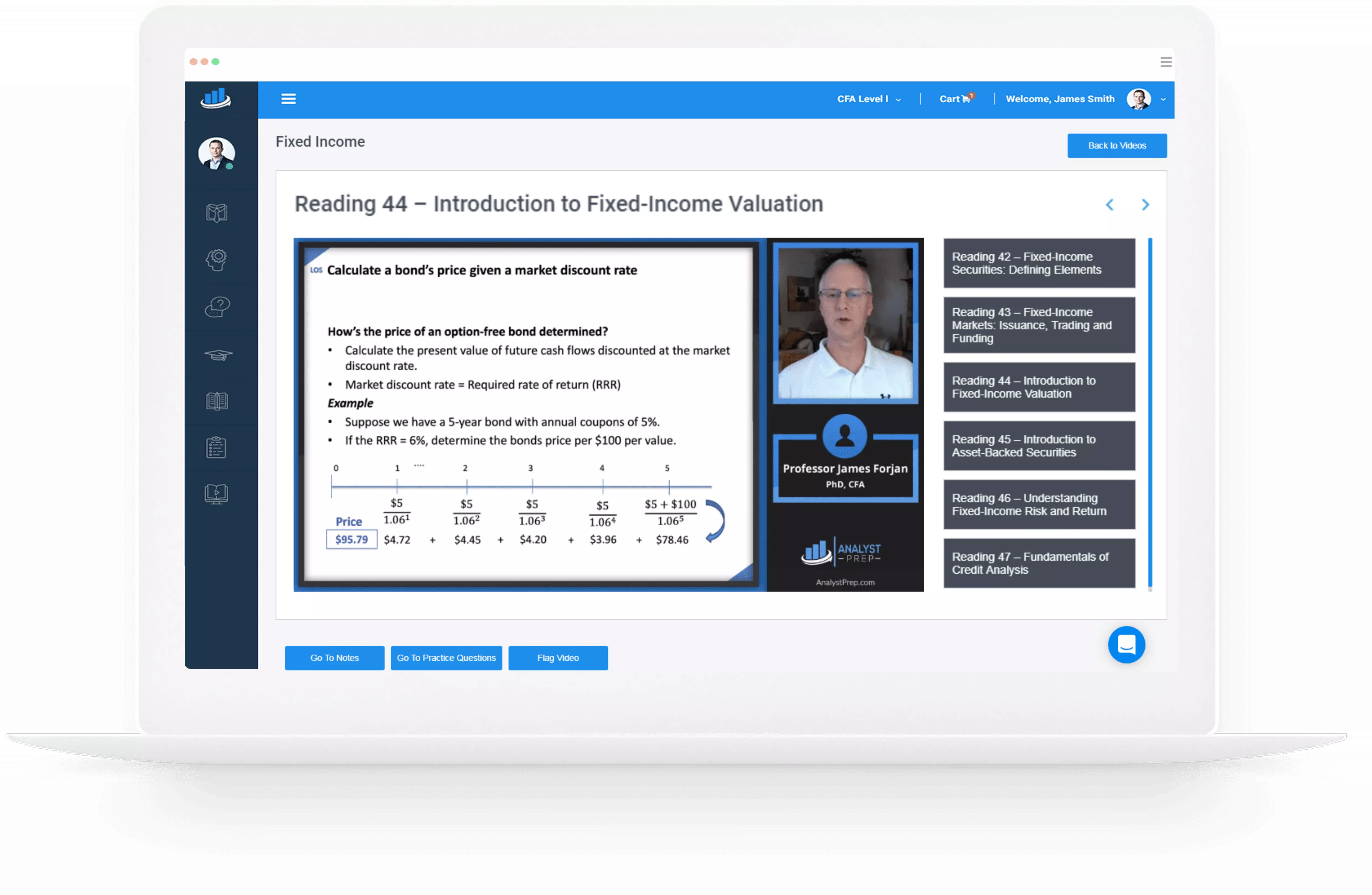
Study Session 14 Reading 42 – Fixed-Income Securities: Defining Elements – LOS 42a: describe basic features of a fixed-income security – LOS 42b: describe content of a bond indenture – LOS 42c: compare affirmative and negative covenants and identify examples…
Learning Sessions – Ethical and Professional Standards
Study Session 1 Reading 1 (56 in 2022) – Ethics and Trust in the Investment Profession Read our in-depth summary of Ethics and Trust in the Investment Profession – LOS 1a: explain ethics – LOS 1b: describe the role of a…
Standard 1(A) – Knowledge of the Law
I. Professionalism Standard I is broad in scope and directed toward competence within a small business environment. This standard makes it clear high ethical standards must apply even when an issue hasn’t been identified in writing.
Standard I(B) – Independence and Objectivity
Standard I(B) – Independence and Objectivity addresses the issue of gifts, payment, and favors that may compromise one’s objectivity and service to clients. This includes advisors, analysts, and credit raters.
Standard I(C) – Misrepresentation
Standard I(C) – Misrepresentation indicates that CFA members must not knowingly misrepresent information related to investment analysis, recommendations, or professional actions.