


CFA® Level I IBF-STS Funding in Singa ...
Imagine registering for the CFA Level I exam and knowing that if you... Read More

The 2027 CFA curriculum changes are finally here. If you are planning to sit for the exam in 2027, you probably have a few important questions on your mind.
Should you defer your exam?
Can you still use your 2026 study materials?
Is Level I becoming harder?
Do you need entirely new notes?
Which topics changed the most?
Most importantly, what should you actually do differently starting now?
These are valid concerns. Fortunately, the 2027 curriculum is not the dramatic overhaul many candidates feared. After reviewing every learning outcome statement across all three levels, one thing becomes clear. The bigger story is not about difficulty. It is about structure, learning flow and practical application.
The CFA Institute is trying to make the curriculum more connected to real-world finance. That changes how candidates should prepare.
The CFA Institute did not rebuild the curriculum from scratch. Instead, it reorganized it.
Several overlapping concepts were consolidated. Some topic names were modernized. Certain modules were rearranged to improve learning progression.
The result is a curriculum that feels more aligned with how finance professionals actually work.
You can see this immediately in the updated topic names.
| Topic Area | 2026 | 2027 |
| Corporate Issuers | Present | Renamed Corporate Finance |
| Equity Valuation | Present | Renamed Equities |
| Portfolio Management | Present | Renamed Portfolio Construction |
These changes may look cosmetic at first. However, they reflect a broader shift toward practical learning and clearer organization.
The Ethics restructuring tells the same story.
Previously, all seven Standards were grouped into larger guidance modules. In 2027, each Standard receives its own dedicated module with targeted practice questions.
This makes the material easier to navigate and easier to review.
Level I Quantitative Methods also reflects this shift. The new Equation Explorers allow candidates to interact with formulas dynamically instead of simply memorizing them.
Candidates can now adjust variables and observe how outcomes change in real time.
Overall, the 2027 curriculum appears designed to improve usability and comprehension. The exam is not necessarily getting harder. It is becoming more application-focused.
Passive studying will likely become less effective.
Level I candidates will experience the biggest transition.
Several core areas were significantly reorganized, especially Quantitative Methods and Equities.
Some candidates may see fewer learning outcomes and assume the curriculum became easier. That would be the wrong conclusion.
The content is leaner but the expectations are more practical.
Quantitative Methods Has Been Streamlined
Quantitative Methods dropped from 38 learning outcomes to 30.
Some repetitive return calculations were removed. Multiple concepts were also consolidated into broader modules.
For example, the standalone Hypothesis Testing module was folded into a larger Estimation and Hypothesis Testing section.
The Parametric and Non-Parametric Tests of Independence module was removed entirely.
The result is a curriculum that emphasizes interpretation and application more than isolated calculations.
You will still need to calculate returns and work through statistical concepts. Even then, the exam increasingly tests whether you understand what those numbers actually mean in a financial context.
That is a major shift.
Equities Saw the Largest Structural Change
Equities experienced the most dramatic reorganization at Level I.
The learning outcomes fell from 66 to 37. Notably, that reduction mostly came from removing overlap and restructuring content more efficiently.
At the same time, the curriculum became more practical and analysis-oriented.
Candidates will now work with:
The curriculum now feels closer to how equity analysts actually approach company analysis.
Instead of memorizing disconnected formulas, candidates are expected to connect valuation concepts to business realities.
What Level I Candidates Should Do
If you are preparing for Level I in 2027, relying entirely on 2026 materials is risky.
The structure changes in Quantitative Methods and Equities are significant. Outdated study sequences could create confusion and preparation gaps.
For topics like Economics, Financial Statement Analysis, Fixed Income, Derivatives and Alternative Investments, older materials may still remain useful.
Nevertheless, updated materials matter for Quant and Equities.
Compared to the other levels, Level II candidates will likely experience the least disruption.
After comparing the 2026 and 2027 learning outcomes line by line, the continuity is striking.
Most Level II topic areas remain almost identical.
| Topic | 2026 Structure | 2027 Structure |
| Quantitative Methods | 7 modules, 39 LOs | Unchanged |
| Economics | 2 modules, 25 LOs | Unchanged |
| Financial Statement Analysis | 6 modules, 42 LOs | Unchanged |
| Fixed Income | 5 modules, 50 LOs | Unchanged |
| Derivatives | 2 modules, 21 LOs | Unchanged |
| Alternative Investments | 4 modules, 29 LOs | Unchanged |
| Portfolio Management | Present | Renamed Portfolio Construction |
That means many Level II candidates can still benefit from older prep materials.
The main exception is Ethics.
Ethics Changed Significantly at Level II
In 2026, Ethics consisted of broader combined modules.
In 2027, the structure becomes far more granular.
Each Standard now has its own dedicated module and targeted practice focus.
This improves clarity and review efficiency. At the same time, it goes without saying that older Ethics materials may no longer align properly with the new learning sequence.
What Level II Candidates Should Do
For most topics, your 2026 notes and prep resources can still provide strong value.
This notwithstanding, you should strongly consider updated Ethics materials.
If your prep provider has not already mapped the new learning outcome structure, reviewing efficiently could become frustrating later in your preparation.
Level III candidates face a more balanced situation.
The core curriculum remains stable. Nevertheless, Ethics and pathway-specific preparation deserve close attention.
The Core Curriculum Is Largely Stable
Most core Level III topics saw little or no change.
| Core Topic | 2027 Status |
| Asset Allocation | Unchanged |
| Portfolio Construction | Unchanged |
| Performance Measurement | Unchanged |
| Derivatives and Risk Management | Unchanged |
From a content perspective, this is reassuring for candidates already familiar with Level III preparation.
Ethics Expanded Significantly
The biggest Level III shift occurred in Ethics.
The curriculum moved from broader combined guidance modules to separate Standard-by-Standard modules.
The Asset Manager Code remains part of the curriculum. However, the overall Ethics structure is now larger and more detailed.
Pathway-Specific Preparation Matters More Than Ever
The pathway system itself remains mostly stable, including:
It is noteworthy that pathway-specific organization is becoming increasingly important.
Candidates using generalized Level III resources may waste time studying material outside their chosen pathway.
What Level III Candidates Should Do
Update your Ethics materials first.
Then carefully verify that your pathway learning outcomes align with the 2027 curriculum structure.
Even small wording adjustments can affect how concepts are tested.
This is probably the biggest question candidates are asking right now.
The honest answer is yes, but only partially.
The foundational finance concepts themselves have not changed. Time value of money still works the same way. Bond pricing formulas are unchanged. Derivatives concepts also remain familiar.
However, curriculum alignment matters more than many candidates realize.
A prep course built around outdated module sequences may create unnecessary confusion.
For example:
Even when the underlying concepts remain similar, the sequencing and emphasis can still affect your preparation significantly.
Updated learning outcome mapping also matters.
The CFA Institute adjusted the numbering and ordering of many learning outcomes. If your prep provider still references old LOS sequences, navigation becomes harder and review becomes less efficient.
This is why candidates should be cautious about relying entirely on outdated prep ecosystems.
The smartest candidates will not panic over the curriculum changes.
Instead, they will adapt strategically.
Prioritize Learning Outcome Mapping
Start by reviewing the 2027 Candidate Body of Knowledge and compare it against your existing prep materials.
Identify:
This process immediately reveals where your preparation gaps may exist.
Use Updated Question Banks
Practice questions matter even more during curriculum transitions.
A strong question bank should reflect:
Using outdated question sets may unintentionally reinforce old learning patterns.
Avoid Studying in Outdated Topic Sequences
This is a mistake many candidates will make.
If your notes follow outdated structures while the official curriculum follows a different flow, your revision process may become disorganized.
That slows retention and increases frustration later in preparation.
Prioritize Providers That Updated Early
Some prep providers will simply rename modules without meaningfully restructuring their materials.
Others will take months to catch up.
Candidates should prioritize providers that already mapped the curriculum changes carefully and rebuilt their study paths around the new learning outcomes.
The 2027 transition is also a major test for prep providers.
Not every provider will adapt effectively.
Some will recycle old notes with minimal edits. Others will fully redesign their learning ecosystems to match the updated curriculum structure.
That difference matters more than candidates may realize.
Updated Study Paths Are Essential
Candidates need study systems that follow the official 2027 curriculum sequence logically.
A provider using outdated structures creates friction during review and weakens learning flow.
Revised Question Banks Matter
Questions written for older learning outcomes may no longer reflect the new emphasis areas or sequencing.
This becomes especially important in Ethics, Quantitative Methods and Equities.
Pathway-Specific Organization Is Increasingly Important
At Level III especially, generalized prep systems are becoming less efficient.
Candidates benefit far more from pathway-specific learning experiences tailored to their actual exam track.
Adaptive Learning Ecosystems Have an Advantage
Static textbooks are harder to update dynamically when curriculum structures evolve.
Modern prep platforms can adapt faster, reorganize learning paths more efficiently and track performance using updated learning outcome mapping.
That flexibility matters during major curriculum transitions like this one.
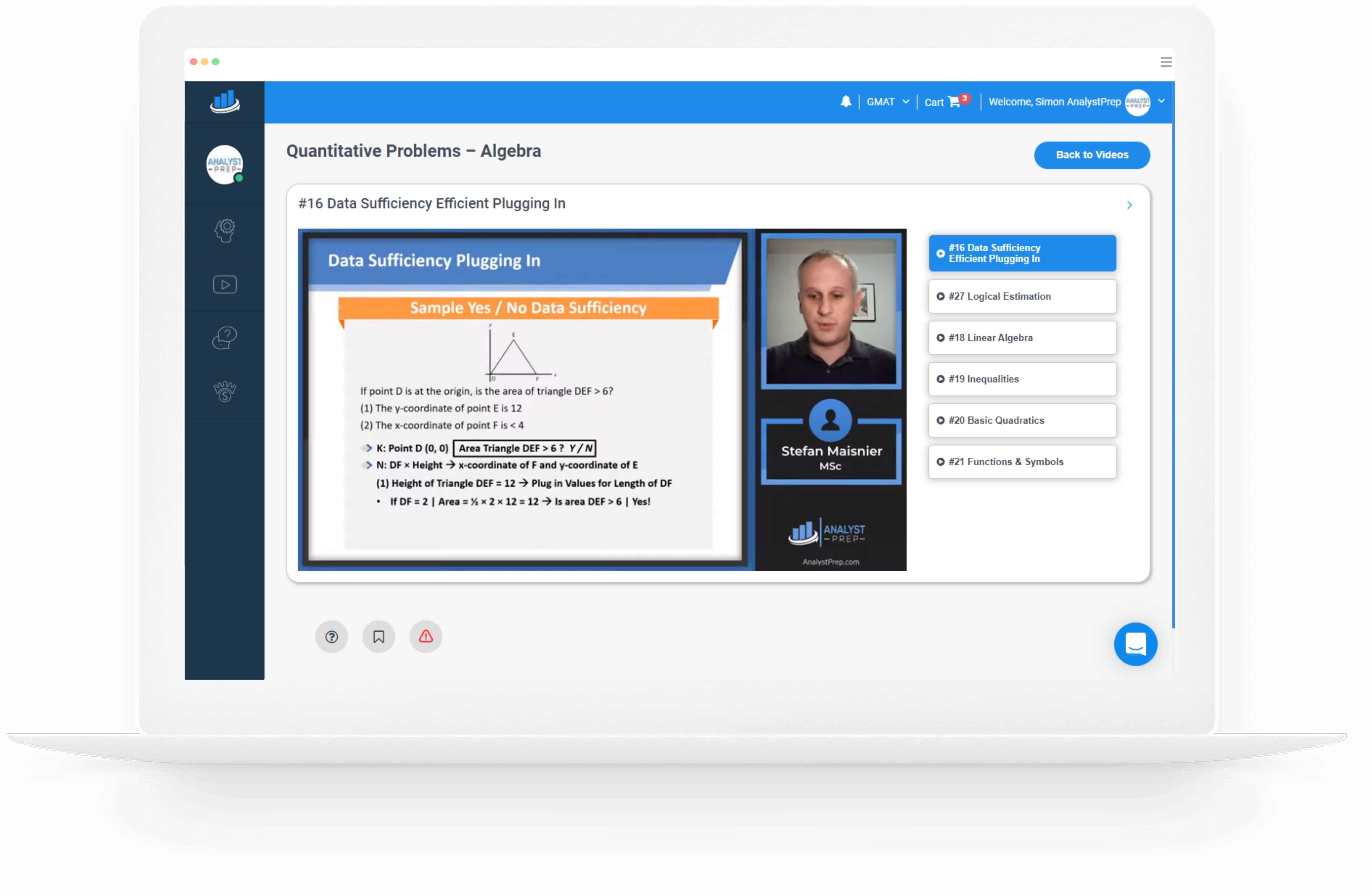
AnalystPrep has already mapped out every 2027 curriculum change into updated study paths, revised question banks and performance tracking systems aligned with the new learning outcomes.
The 2027 CFA curriculum changes are important but they are not a reason to panic or delay your exam plans.
The bigger story is not increased difficulty.
It is improved organization, more practical learning and better alignment with real-world finance.
Level I candidates should pay the closest attention, especially in Quantitative Methods and Equities.
Level II candidates will likely experience the smoothest transition.
Level III candidates should focus carefully on Ethics and pathway alignment.
Across all levels, candidates should think carefully about whether their prep materials truly match the new curriculum structure.
The candidates who adapt early will have a major advantage.
The providers who updated early will make that transition much easier.
Access updated CFA study notes, practice questions, video lessons, and mock exams to stay aligned with the latest curriculum changes.
Offered by AnalystPrep






Imagine registering for the CFA Level I exam and knowing that if you... Read More

Let me tell you something they don’t put in the official materials. Nearly... Read More
Get Ahead on Your Study Prep This Cyber Monday! Save 35% on all CFA® and FRM® Unlimited Packages. Use code CYBERMONDAY at checkout. Offer ends Dec 1st.
