



The most Effective Strategies to Use D ...
The prospect of the FRM exam can be daunting and cause anxiety in... Read More

If you are trying to figure out how to prepare for FRM Part 1, you’re already ahead of most candidates.
Why? Because many people underestimate this exam at the start. They assume it’s just another finance certification that can be managed with a few weeks of effort. That assumption usually doesn’t last long.
The Financial Risk Manager (FRM) program is built differently. The FRM exam Part 1 does not just test what you know. It tests how you think, how you interpret information and how quickly you can apply concepts under pressure.
So instead of asking whether the exam is difficult, a better question is this.
Do you have a study plan that actually prepares you for how the exam works?
This guide takes you through a practical and realistic FRM study plan. Not a theoretical one. Not a perfect one. A plan that reflects how candidates actually prepare, adjust, struggle and ultimately pass.
Most candidates need 250 to 300 hours over 4 to 6 months to prepare for FRM Part 1.
That is your baseline FRM study time and FRM preparation time.
If you’ve been searching:
This is the range you should work with.
Now, here is the part many people overlook. It is not just about hitting 300 hours. It is about how those hours are used. Two candidates can both study for 300 hours and end up with very different outcomes.
Before you build your FRM Part 1 study plan, you need to understand the nature of the exam.
The FRM Level 1 exam includes:
That last point matters more than most people expect. You will not simply recall definitions. You will need to interpret scenarios, connect ideas and make decisions quickly.
FRM Part 1 Syllabus
The syllabus is divided into four core areas:
At first glance, this looks manageable. Four topics, clear weights. But the challenge comes from how these areas interact. A question in Valuation may rely on concepts from Quant. A question in Financial Markets may test your understanding of risk frameworks.
This is why your FRM preparation cannot be linear. It has to be layered.
Let’s address this honestly.
There is no official number that guarantees a pass. Nevertheless, candidate experience gives us a reliable range.
Your actual FRM study hours depend on:
If you are new to probability, statistics or valuation models, your FRM Level 1 preparation time will likely increase. That is normal.
The key is not to compare your timeline with someone else’s. It is to make sure your preparation is thorough enough to handle unfamiliar questions.
Your timeline will shape your entire FRM Level 1 study plan.
3 Month Plan
This is a compressed schedule that requires about 20 to 25 hours per week.
It can work, but it comes with pressure. You will have limited time to revisit topics or recover from weak areas. This version of how to prepare for FRM is best suited for candidates with strong prior knowledge.
4 Month Plan
This is the most balanced option.
You are looking at 15 to 20 hours per week. It allows you to cover the syllabus, practice consistently, and still have time to adjust your approach.
For most candidates, this is the most effective FRM preparation time.
6 Month Plan
This is the most sustainable path, especially for working professionals.
With 10 to 15 hours per week, you can take your time with difficult topics and avoid burnout. If you are figuring out how to prepare for FRM Level 1 alongside a full schedule, this approach gives you breathing room.
Here is a structure that works in real scenarios, not just on paper.
| Week | Focus | Hours |
| 1 to 4 | Foundations and Quantitative Analysis | 12 to 15 hours |
| 5 to 8 | Financial Markets and begin Valuation | 15 to 18 hours |
| 9 to 12 | Valuation and intensive practice | 18 plus hours |
| 13 to 16 | Revision and mock exams | 20 plus hours |
Notice how the hours increase over time. Early on, you are building understanding. Later, you are building speed and accuracy.
This is how your FRM Part 1 study hours should evolve.
A common mistake is treating all topics equally. The exam does not.
That means 60 percent of your score comes from the last two areas.
However, here is more information. Quantitative Analysis, even at 20 percent, often determines whether candidates struggle or succeed. It underpins many other topics.
Therefore, your FRM study plan should do two things at once:
If you are still wondering how to study for FRM Part 1, break your preparation into phases.
Month 1: Build Your Base
Focus on Foundations and Quantitative Analysis.
This is where most candidates either set themselves up for success or create gaps that become obvious later. Take your time here.
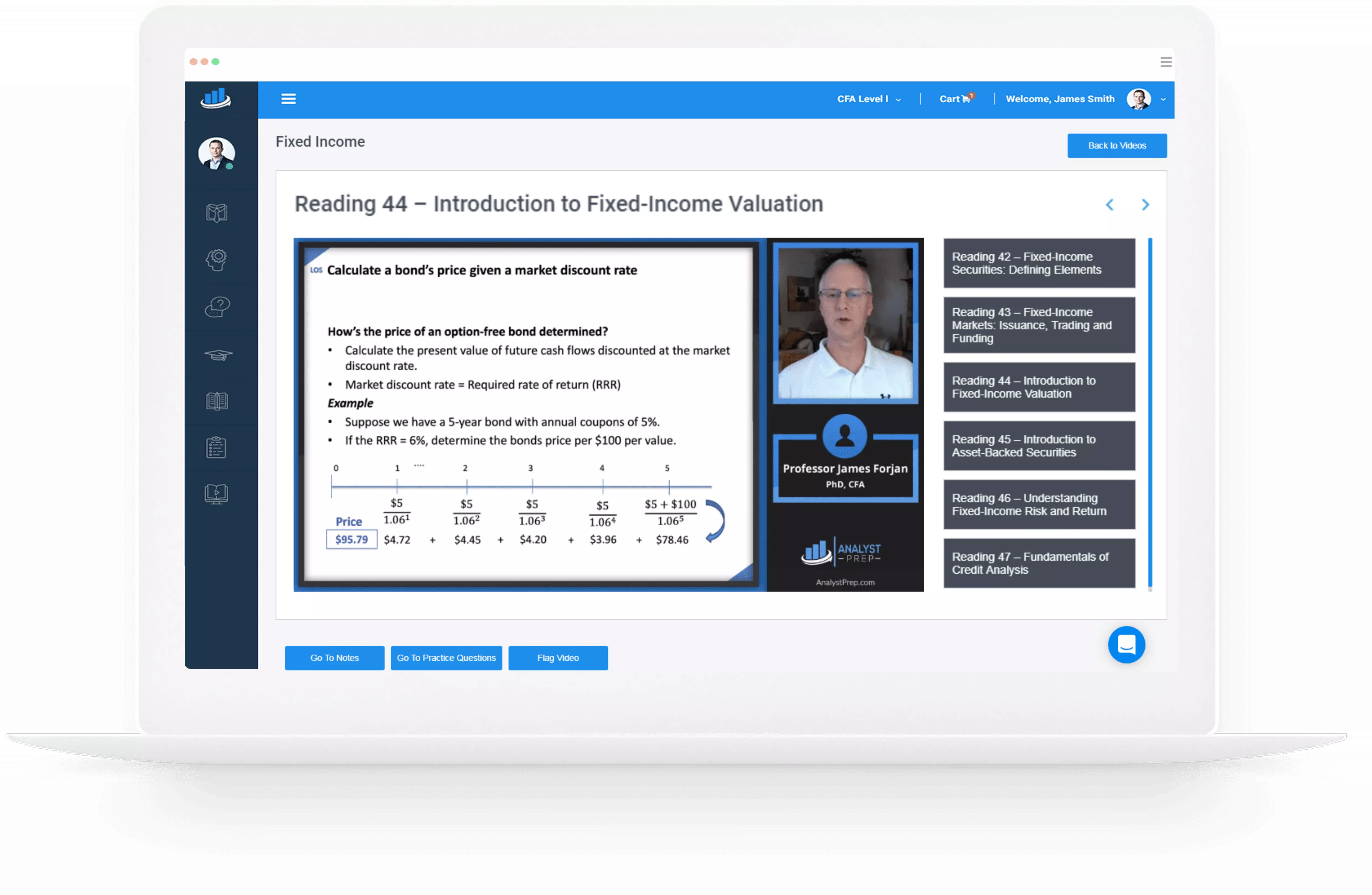
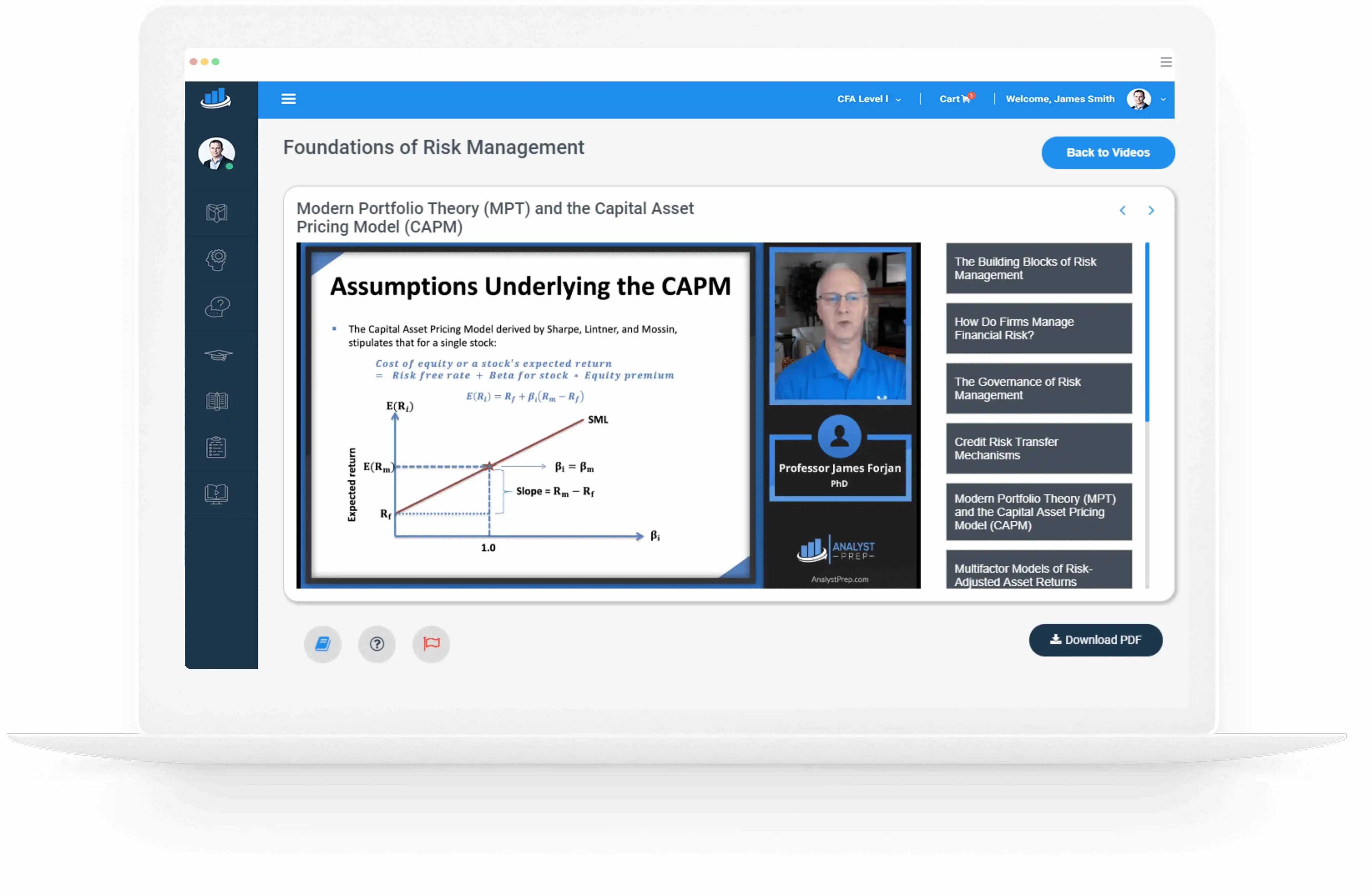
Use structured tools like FRM video lessons to simplify concepts that feel abstract.
Month 2: Expand and Connect
Move into Financial Markets and Products and begin Valuation.
Start practicing alongside your study. Do not wait until you finish the syllabus. Practice helps you understand how topics are tested.
Months 3 and 4: Practice and Identify Weaknesses
This is where your preparation becomes exam-oriented.
You should be solving questions regularly using a reliable FRM question bank. This exposes you to different question styles and helps you recognize patterns.
Take your first mock exam during this phase. It will likely feel difficult. That is the point.
Final Month: Refine and Simulate
This stage is about sharpening your performance.
Take between 2 and 4 full-length exams using realistic FRM mock exams.
Focus on:
Review your mistakes carefully. This is where your score improves.
If you look closely at candidates who pass the FRM Level 1 exam, you will notice a pattern.
They are not necessarily smarter. They are more consistent.
They:
This is what effective FRM exam preparation time looks like in practice. It is steady, deliberate and responsive.
The quality of your resources affects the efficiency of your FRM preparation.
A strong setup includes:
You do not need everything. You need a combination that supports how you learn.
Managing your FRM study time is often harder than understanding the material.
A few practical adjustments make a difference:
This is how you make your FRM Level 1 preparation time more effective without increasing total hours.
After all your preparation, execution matters.
During the FRM exam Part 1:
The exam is designed to challenge you. Your job is to manage that pressure effectively.
Some mistakes come up repeatedly:
Avoiding these can improve your outcome more than simply increasing your FRM study hours.
How to prepare for FRM Part 1 effectively
Follow a structured FRM Part 1 study plan, practice consistently and review your weak areas regularly.
How long to study for FRM Level 1
Most candidates need 4 to 6 months and around 250 to 300 hours.
How to study for FRM if you are not strong in math
Spend more time on Quantitative Analysis and focus on understanding concepts step by step. Practice consistently.
What are FRM course fees?
FRM course fees vary depending on your provider. You should also consider GARP registration and exam fees.
Ready to Start Your FRM Study Plan
At this point, you should have a clear understanding of how to prepare for FRM Part 1.
You know how long it takes, how to structure your study and where to focus your effort.
The FRM Part 1 exam is demanding but it is manageable with a consistent and structured approach.
Start early. Stay consistent. Focus on practice.
That is what ultimately makes the difference.
Access FRM Part I study notes, practice questions, and mock exams to support a structured risk management exam plan.
Offered by AnalystPrep
The prospect of the FRM exam can be daunting and cause anxiety in... Read More

If there is one number that every CFA candidate hears repeatedly, it is... Read More
Get Ahead on Your Study Prep This Cyber Monday! Save 35% on all CFA® and FRM® Unlimited Packages. Use code CYBERMONDAY at checkout. Offer ends Dec 1st.
