


August 2026 CFA® Pass Rates and How T ...
Last updated: September 2026 The August 2026 CFA exam cycle is a little... Read More

If you just got your February 2026 CFA Level 1 results and saw a fail result, we want you to take a deep breath.
We know that feeling. It stings!
You put in months of work. You sacrificed weekends. You said no to dinners with friends, to family gatherings, to the things you enjoy. You probably walked out of that exam center feeling like you had a real shot. Maybe you even felt confident. Then this!
Here is what we need you to know. You are not alone. The global pass rate for February was 45 percent. That means more than half the people who sat for that exam got the same result you did. Thousands of candidates across the world are waking up to that same disappointing outcome.
More importantly, most of those people will go on to pass Level 1 on their next try. And so will you. We have worked with hundreds of resitting candidates over the years and the ones who succeed are the ones who take a systematic approach. They do not just try harder. They try differently.
Let us show you exactly how to do that.
When CFA Institute sends your result, they also give you a performance report. It shows how you did in each topic area. You will see three categories:
This is not just a report card. It is your study guide for the next attempt. Ignoring it would be like a doctor giving you test results and you choosing to ignore them. That information is there to guide your next steps.
Here is what you need to do. Grab a piece of paper or open a spreadsheet. Write down every topic where you scored below 50 percent. Those are now your priority topics. Write down every topic where you scored between 50 and 70 percent. Pay special attention to the ones with higher exam weights.
Why does weight matter? A topic like ethics carries 15 to 20 percent of the total exam. A borderline score in ethics hurts you much more than a borderline score in a topic worth only 5 to 8 percent. Your time is limited. You need to spend it where it will have the biggest impact on your overall score.
We see this happen all the time. A candidate fails and then they pick up the same books, watch the same videos, start from Reading 1 and hope for a different outcome. That is not going to work.
Think about it this way. If you followed a certain study plan and it led to a fail, following the exact same plan again will likely lead to the same result. You need to change your approach.
Here is a better way. Look at your weak topics. Look at the exam weights. Then build your priority list like this.
Let us say you scored below 50 percent in Financial Statement Analysis and Fixed Income. FSA is worth 11 to 14 percent of the exam. Fixed Income is worth 10 to 12 percent. Those become your critical topics. You will spend 60 percent of your study time there.
Let us say you scored borderline in ethics, which is worth 15 to 20 percent. That goes in your high priority category. You will spend 30 percent of your time there.
Let us say you scored above 70 percent in Quantitative Methods, which is worth 5 to 8 percent. You can afford to spend just 10 percent of your time maintaining that knowledge. A few practice questions each week will keep it fresh.
This is called weighted weakness targeting. It is efficient. It focuses your energy where it will have the biggest impact on your score. Resitting candidates who use this method often see their scores jump by 10 to 15 percentage points.
Most candidates who fail do enough reading, do enough watching. What they do not do enough of is deliberate practice.
Let us define what we mean by deliberate practice.
It is not just answering questions. It is answering questions with the specific goal of identifying and fixing gaps. It is reviewing every wrong answer until you understand not just what the correct answer is but why your answer was wrong.
Here is a benchmark for you. If you attempted fewer than 1,500 practice questions before your first exam, that number needs to go up. Aim for 2,000 or more this time. That might sound like a lot, but if you spread it over 12 weeks, it is about 170 questions per week. That is entirely doable.
And do not just answer them and move on. Keep a wrong answer log. We will explain how to do that in a moment. Review that log every week. The candidates who make this jump almost always see their scores improve significantly.
Your mistakes are your most valuable study tool. Most candidates answer a question, see they got it wrong, read the explanation and move on. Then they make the same mistake again two weeks later because they never revisited it.
Here is how to fix that. Create a simple log. You can use a notebook or a spreadsheet. For each mistake, write down four things:
Let us give you an example. Suppose you missed a question about FIFO and LIFO in a rising price environment. Your log entry might look like this:
| Question | Topic | What I Missed | Correct Concept |
| Mock 2 Question 42 | FSA | Confused FIFO and LIFO in rising prices | In rising prices, FIFO gives higher inventory value and lower COGS. LIFO gives lower inventory value and higher COGS. Net income is higher under FIFO. |
Now, review this log every week. Every single week. The repetition solidifies the correct concept in your memory and prevents you from making the same mistake on exam day.
A lot of candidates wait until the final month to take their first mock exam. That is a mistake. Here is why.
When you take a mock exam early, your score will probably be low. That is fine. In fact, that is the point. The whole purpose of a mock exam is to identify your gaps. If you take it in the final month, you have limited time to fix those gaps. If you take it six to eight weeks before exam day, you have plenty of time.
Here is a schedule that works well. Six to eight weeks before the exam, take your first full mock. Score it. Identify your three lowest-scoring topics. Spend the next two weeks drilling those topics with focused practice questions. Then take another mock. Identify your new lowest topics. Drill again. Repeat.
By the time exam day arrives, you will have taken four to five full mocks. You will have closed most of your gaps. And you will have built the stamina to sit through two 135-minute sessions without fading mentally.
Sometimes the issue is not knowledge. It is pace.
On exam day, you have 135 minutes for the first session and 135 minutes for the second session. Each session has roughly 90 questions. That gives you about 90 seconds per question. If you are spending three or four minutes on a difficult question, you are stealing time from other questions that you might have answered correctly.
Practice this during your mocks. If you get stuck on a question, flag it, make your best guess and move on. Unanswered questions are guaranteed zero. A guessed question at least has a chance. You can always come back to flagged questions if you have time at the end.
Also practice the rhythm of the exam. Take your mocks in one sitting. Do not pause. Do not take extended breaks. Simulate the real conditions so your body and mind get used to the endurance required.
Now, let us give you specific guidance on how to tackle the topics that most candidates struggle with.
If Financial Statement Analysis was a weak area, focus on three areas. First, cash flow statement construction. Understand the difference between direct and indirect methods. Know how to classify cash flows as operating, investing or financing. Second, inventory costing methods. Understand how FIFO and LIFO affect financial statements in different price environments. Third, long-lived asset accounting. Understand depreciation methods, capitalization versus expensing and impairment.
If Derivatives was a weak area, focus on drawing payoff diagrams. Actually, sketch them out. Draw the payoff for a long call, a short call, a long put, a short put. Draw the payoff for a forward contract. Draw the payoff for a combination like a straddle. The act of drawing builds intuition that reading alone cannot give you.
If Fixed Income was a weak area, focus on bond pricing and duration. Draw a timeline for every bond pricing question. Understand duration as sensitivity. A bond with a duration of 5 will lose about 5 percent in price if interest rates rise by 1 percent. That mental model helps you reason through questions even if you forget the exact formula.
Resitting requires consistency, not cramming. You cannot wait until the final month and expect to fix all your gaps.
Aim for 12 to 15 hours per week over 12 to 14 weeks. That is sustainable. Here is a sample weekly structure:
This schedule gives you consistent exposure to the material without burning out.
Failing Level 1 is not a reflection of your intelligence or your potential. We have worked with candidates who failed Level 1 twice and went on to pass Level 2 and Level 3 on their first try. The common thread among them was not natural brilliance. It was resilience and a willingness to change their approach.
Preparation is something you can control. You now have more information about your weaknesses than you did before. You have a clearer picture of what the exam expects. Use that information.
Take a week to clear your head. Then get back to work. You have everything you need to pass the next time around.
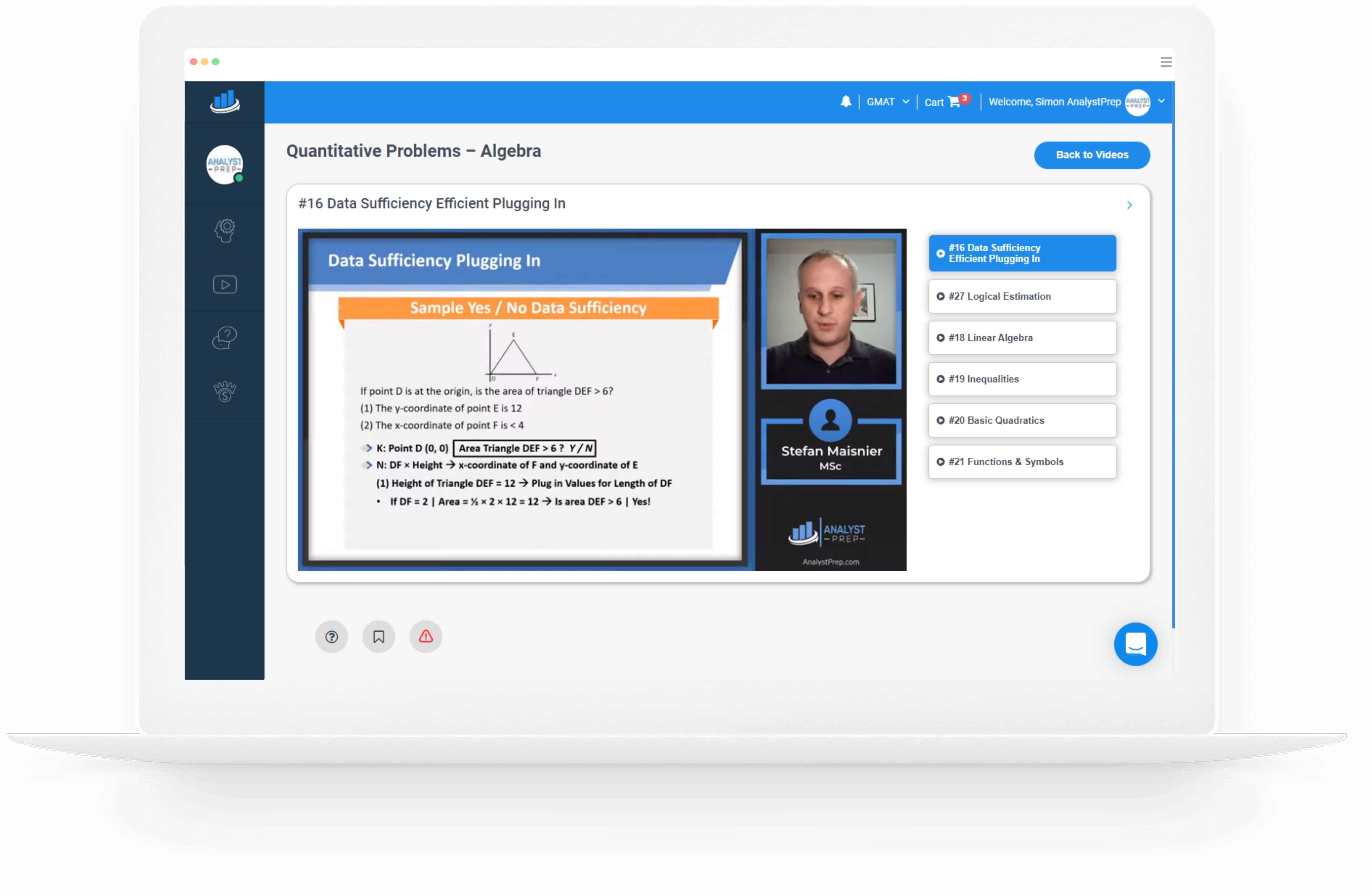
Access CFA Level I study notes, practice questions, mock exams, and video lessons to review weak areas and prepare for your next attempt.
Offered by AnalystPrep






Last updated: September 2026 The August 2026 CFA exam cycle is a little... Read More

For 2019, the major change is the addition of one reading – Fintech – in... Read More

Get Ahead on Your Study Prep This Cyber Monday! Save 35% on all CFA® and FRM® Unlimited Packages. Use code CYBERMONDAY at checkout. Offer ends Dec 1st.