


Which CFA Level I PSM Should You Choos ...
CFA Level I candidates in 2027 can choose between two Practical Skills Modules... Read More
Many CFA candidates follow the same preparation routine: finish all the readings, watch the video lessons and then start answering practice questions. Although this approach may seem organized, it can leave you with a significant gap between understanding what you have studied and being able to apply it.
The problem is that reading a concept does not necessarily mean you can recall or use it independently. By the time you finish the curriculum, you may have forgotten earlier topics or discovered that you misunderstood important concepts.
A more effective CFA study strategy is to integrate practice questions into your learning from the beginning. After establishing a basic understanding of a topic, attempt relevant questions, review the explanations and revisit concepts you find difficult.
In this guide, we’ll explain when to start CFA practice questions, how to balance reading with question practice and how to use your results to improve your examination preparation.
Completing all the CFA readings before attempting practice questions may seem like a logical approach. You get through the material first and then test how much you have learned. However, this strategy can create problems because it delays the point at which you discover whether you can actually apply what you have studied.
Here are four reasons why postponing CFA question practice can be counterproductive.
When reading study materials, concepts may seem straightforward because the explanations and formulas are directly in front of you. However, recognizing an explanation is different from recalling the information and applying it independently.
For example, you may understand the time value of money concepts while reading a lesson. However, when presented with an unfamiliar calculation, you might struggle to identify the appropriate formula or determine which information is relevant.
Practice questions help reveal this difference. They require you to retrieve information, interpret the question and apply the relevant concept without relying on the explanation in your notes.
If you postpone practice until completing the entire curriculum, you may not discover misunderstandings until several months into your preparation.
Consider a candidate who completes Financial Statement Analysis but does not attempt questions on the topic. They move on to Economics, Fixed Income and other subjects, assuming they have understood everything.
When they eventually start practising, they discover that they struggle with financial ratios, accounting adjustments or interpreting financial statements. They now have to revisit material they studied months earlier while also covering the remaining curriculum.
Attempting questions immediately after studying a topic helps identify these gaps earlier, when the material is still relatively fresh.
The CFA curriculum covers several subjects, and candidates often study them sequentially. This means considerable time can pass between learning a topic and using it in practice.
For example, you might complete Quantitative Methods early in your preparation and move on to other subjects. Without regularly revisiting its concepts and formulas, you may struggle to remember them when you eventually begin comprehensive question practice.
Regular practice provides opportunities to retrieve and apply previously studied information. It also helps you identify topics that need additional revision before they become significant weaknesses.
Completing readings, highlighting important passages and watching video lessons can create the impression that you are making substantial progress. However, these activities do not necessarily demonstrate that you can independently answer examination-style questions.
You may recognize a formula when reading it but struggle to remember when to use it. Similarly, a concept may appear familiar until you encounter a question that requires you to apply it in an unfamiliar scenario.
Practice questions provide a more meaningful way to evaluate your understanding. They show whether you can recall information, interpret question requirements and select the appropriate approach without relying on your study materials.
The objective of CFA preparation should not simply be to finish the curriculum. It should be to understand, remember and apply what you have studied. Integrating practice questions throughout your preparation helps you measure that progress rather than waiting until the end to discover what you still need to learn.
CFA practice questions should be part of your learning process, not something you introduce only after completing the curriculum. Attempting questions alongside your readings and video lessons helps you test your understanding, identify knowledge gaps and develop the ability to apply financial concepts.
Here are five reasons to make question practice a regular part of your CFA study routine.
Attempting questions after completing a reading helps establish whether you have understood the material.
For example, after studying time value of money, try answering questions involving present value, future value and discounting. If you struggle to select the appropriate formula or interpret the question, you know which concepts require further attention.
This is more useful than assuming you understand a topic simply because the reading seemed clear.
Reading and watching lessons are useful for introducing concepts, but you also need to retrieve information from memory.
Practice questions encourage active recall by requiring you to remember definitions, formulas and relationships without immediately referring to your notes.
For example, instead of repeatedly reading the formula for calculating a bond’s current yield, attempt questions that require you to identify the relevant inputs and perform the calculation independently.
This helps you move beyond recognizing information toward recalling and applying it.
Question explanations can reveal misconceptions that may not be obvious while reading.
You might understand the general idea behind a financial concept but misunderstand an important assumption or calculation step. Reviewing the explanation helps you identify exactly where your reasoning went wrong.
Addressing these misunderstandings immediately also reduces the likelihood of carrying incorrect assumptions into more advanced topics.
CFA examination questions do not simply ask you to repeat definitions from the curriculum. They require you to interpret information, identify relevant concepts and apply appropriate methods.
Regular practice exposes you to different ways of testing the same learning objective.
For example, you may understand a concept in isolation but struggle when it appears within a financial scenario involving several variables. Working through different question formats helps you become more comfortable recognizing which principles apply.
Practice performance can help you decide where to concentrate your remaining study time.
If you consistently answer questions correctly on a particular topic, you may need less additional review than you would for a subject where you repeatedly struggle.
However, do not ignore questions you answered correctly through guessing. Review those explanations as well to establish whether you genuinely understand the underlying concepts.
The goal is not to complete as many questions as possible after every reading. It is to use question practice to guide your learning. A smaller set of carefully reviewed questions can be more valuable than completing large numbers without understanding your mistakes.
An effective CFA study strategy should combine learning new concepts with regular question practice. Spending your entire study session reading or watching lessons can leave you with little time to test whether you understand the material.
Instead, follow a learning cycle: study a concept, attempt relevant questions, review your answers and revisit anything you find difficult.
Here are five steps to help you balance CFA readings, video lessons and practice questions.
Begin each study session by reading the relevant curriculum material or watching an explanatory video. Focus on understanding the main concepts, definitions, formulas and learning outcomes.
You do not need to memorize every detail immediately. The objective is to establish enough understanding to attempt related questions.
For example, when studying Fixed Income, first understand the relationship between bond prices and interest rates before moving on to questions involving bond valuation.
After completing a reading or video lesson, attempt questions directly related to the material.
Try answering them without immediately referring to your notes. This helps establish whether you can recall the information and apply it independently.
Start with questions covering the specific learning outcomes you have studied. If you struggle, use the explanations to identify what you need to review.
Do not simply check whether your answers are correct and move on. Review the reasoning behind both correct and incorrect responses.
Identify whether your mistakes resulted from:
Understanding why you made a mistake helps you determine the most appropriate next step.
If your practice results reveal a knowledge gap, return to the relevant study notes or video lesson.
Focus on the specific concept you struggled with rather than automatically rereading the entire chapter. Once you have reviewed the material, attempt similar questions to check whether your understanding has improved.
Maintain a simple record of the topics you have studied, questions attempted and areas requiring additional attention.
For example, you could organize a three-hour CFA study session as follows:
| Activity | Example Time Allocation |
| Reading or watching lessons | 90 minutes |
| Reviewing examples and formulas | 30 minutes |
| Attempting practice questions | 45 minutes |
| Reviewing answers and mistakes | 15 minutes |
| Total | 180 minutes |
This is an illustrative structure, not an official CFA Institute recommendation or a fixed allocation every candidate must follow. Some difficult topics may require more initial learning time, while others may benefit from additional question practice.
The important thing is to avoid spending all your available study time consuming information without testing what you have learned.
By combining curriculum study, video lessons and regular question practice, you can make your preparation more active and identify knowledge gaps as you progress through the CFA curriculum.
Not all CFA practice questions serve the same purpose. As you progress through the curriculum, your practice should gradually move from testing individual concepts to evaluating your ability to apply knowledge across different topics and under timed conditions.
Here are five types of questions to incorporate into your CFA study strategy.
Start with questions directly related to the reading or learning outcome you have just completed.
These questions help you establish whether you understand the key concepts, definitions and calculations before moving to another topic.
For example, after studying time value of money, attempt questions covering present value, future value and discounting. If you struggle with a particular calculation, revisit the relevant explanation before progressing.
Once you have completed several readings within a subject, move to broader question sets covering multiple concepts within that topic.
For example, after studying several Financial Statement Analysis readings, attempt questions covering financial ratios, inventory analysis and cash flow analysis.
This helps you evaluate your understanding beyond individual readings and recognize how related concepts connect.
As your curriculum coverage expands, gradually introduce questions from different CFA subjects.
Unlike reading-level or topic-level practice, mixed-topic questions require you to identify which concept is being tested without relying on a chapter heading.
This is particularly useful for developing your ability to recognize relevant formulas, interpret question requirements and switch between different areas of the curriculum.
Once you are comfortable with the relevant concepts and question formats, introduce timed practice.
Working under time constraints helps you become familiar with examination pacing and identify questions that take longer than expected.
Use your results to evaluate whether you need to improve calculation speed, question interpretation or your approach to managing difficult questions.
Mock examinations serve a different purpose from ordinary practice questions. They help you evaluate your broader examination readiness by testing your knowledge across the curriculum under conditions resembling the actual examination.
Introduce full-length mocks after covering sufficient curriculum material to make the assessment meaningful. As your examination approaches, use them to evaluate your performance, identify weaker areas and practise managing your time across the examination.
Here is a summary of how the different practice formats fit into your preparation:
| Practice Type | Main Purpose | When to Use It |
| Reading-level questions | Test immediate understanding | After individual readings |
| Topic-level questions | Evaluate broader topic knowledge | After covering several readings |
| Mixed-topic questions | Test recall and application across subjects | As curriculum coverage expands |
| Timed question sets | Improve pacing and question-solving efficiency | During later preparation |
| Mock examinations | Evaluate overall examination readiness | After sufficient curriculum coverage |
The important thing is to progress gradually. Begin with questions that reinforce what you have just studied, then introduce broader and more challenging practice as your understanding develops. You do not need to wait until you finish the entire curriculum before attempting questions, but you should establish a basic understanding of each concept before testing yourself.
Answering CFA practice questions is only part of the learning process. You also need to understand why you selected an answer, where your reasoning went wrong and what you should do differently next time.
Simply checking your score and moving to another question set limits the value of practice. Here are five ways to review CFA practice questions more effectively.
After answering a question, read the explanation even if you selected the correct option. Make sure you understand the concept, formula or reasoning behind the answer.
For calculation-based questions, review the steps used to arrive at the result. For conceptual questions, identify the principle being tested and how it applies to the scenario.
The objective is to understand the reasoning rather than memorize the correct option.
Reviewing incorrect answer choices can help you recognize common misunderstandings and distinguish between similar concepts.
For example, a question may present several financial ratios that appear relevant to a particular analysis. Understanding why one ratio is appropriate and the others are not can improve your ability to interpret similar questions.
Pay attention to the assumptions, calculations or concepts that make each alternative incorrect.
A correct answer does not always demonstrate that you understand the material.
If you selected an option because it seemed familiar or eliminated two alternatives without knowing the underlying concept, flag the question for review.
Revisit the explanation, identify the relevant learning outcome and attempt a similar question to establish whether you can apply the concept independently.
Not all incorrect answers require the same corrective action. Classify your mistakes to determine what needs attention.
Four common categories include:
Identifying the type of error helps you choose the right revision activity instead of repeatedly rereading material that you already understand.
Keep a simple record of questions that expose recurring weaknesses. This allows you to track mistakes and prioritize topics requiring additional attention.
For example:
| Question Topic | Error Type | What Went Wrong? | Next Action |
| Time Value of Money | Formula error | Applied the wrong equation. | Review the formula and attempt similar questions. |
| Fixed Income | Conceptual error | Misunderstood the price-yield relationship. | Revisit the relevant lesson. |
| Ethics | Interpretation error | Misread the scenario. | Review the applicable Standard. |
| Economics | Recall error | Forgot an important relationship. | Use active recall and repeat practice. |
Review your error log regularly and revisit recurring mistakes rather than simply increasing the number of questions you attempt.
Effective CFA question-solving involves learning from every attempt, not just counting correct answers. When you understand why you made a mistake and take steps to correct it, your practice sessions become more purposeful and help guide your subsequent revision.
Practice questions are important throughout the CFA Program, but the skills tested become more demanding as you progress through the three examination levels. Your practice strategy should therefore reflect the question formats, curriculum requirements and analytical skills expected at each level.
Here is how to approach question practice at each stage.
CFA Level I covers a broad range of investment concepts, making it important to develop a solid understanding of the curriculum.
Your practice should include:
Focus on broad curriculum coverage and understanding foundational concepts. Avoid concentrating exclusively on questions from topics you find comfortable.
CFA Level II requires candidates to apply their knowledge to information presented in vignette-based item sets. This makes question interpretation and analytical application particularly important.
Your CFA Level II practice questions should help you develop the ability to:
When practising, read the vignette carefully before answering the associated questions. Review how the information provided supports the correct answer and why alternative choices are incorrect.
CFA Level III requires candidates to integrate investment knowledge and communicate their decisions through both item-set and constructed-response questions.
Your practice should therefore cover:
Do not rely exclusively on multiple-choice practice. You also need to develop the ability to formulate clear, relevant written answers under examination conditions.
The key is to adapt your question-practice strategy as you progress through the CFA Program. A strategy that works well for Level I may not provide sufficient preparation for Level II vignette-based questions or Level III constructed responses. Focus on the specific skills required at each level and practise the applicable question formats regularly.
One of the easiest ways to delay CFA question practice is to treat it as a separate activity that you will start once you finish the curriculum. A better approach is to make practice questions part of your weekly study schedule from the beginning.
You do not need to attempt hundreds of questions every day. What matters is maintaining a consistent routine that combines new learning, question practice and revision.
Here is an illustrative weekly CFA study schedule:
| Day | Main Learning Activity | Practice Activity |
| Monday | Study a new reading. | Attempt questions covering the concepts you have just learned. |
| Tuesday | Continue studying the topic. | Complete additional reading-level questions. |
| Wednesday | Study another reading. | Review previous concepts and answer related questions. |
| Thursday | Cover the remaining material. | Attempt topic-level questions covering multiple readings. |
| Friday | Review previously studied topics. | Complete mixed-topic practice questions. |
| Saturday | Consolidate difficult concepts. | Review incorrect answers and revisit weaker areas. |
| Sunday | Rest or complete light revision. | Optional formula review or short practice session. |
The schedule is a starting point rather than a fixed requirement. Adapt it according to your available study hours, curriculum progress and examination date.
Keep the following principles in mind:
The objective is to make practice a regular part of your preparation rather than a separate activity postponed until the curriculum is complete.
Remember: You do not need to finish every reading before testing your understanding. Build question practice into your weekly routine, use your results to guide revision and adjust your schedule as you progress towards the CFA examination.
Effective CFA preparation involves more than reading the curriculum. You need resources that help you understand concepts, apply what you have learned and identify areas requiring further attention.
At AnalystPrep, our learning resources work together to support each stage of this process.
Our CFA study notes help you understand important curriculum concepts, review definitions and work through relevant calculations. Use them to establish a foundation before attempting questions on each topic.
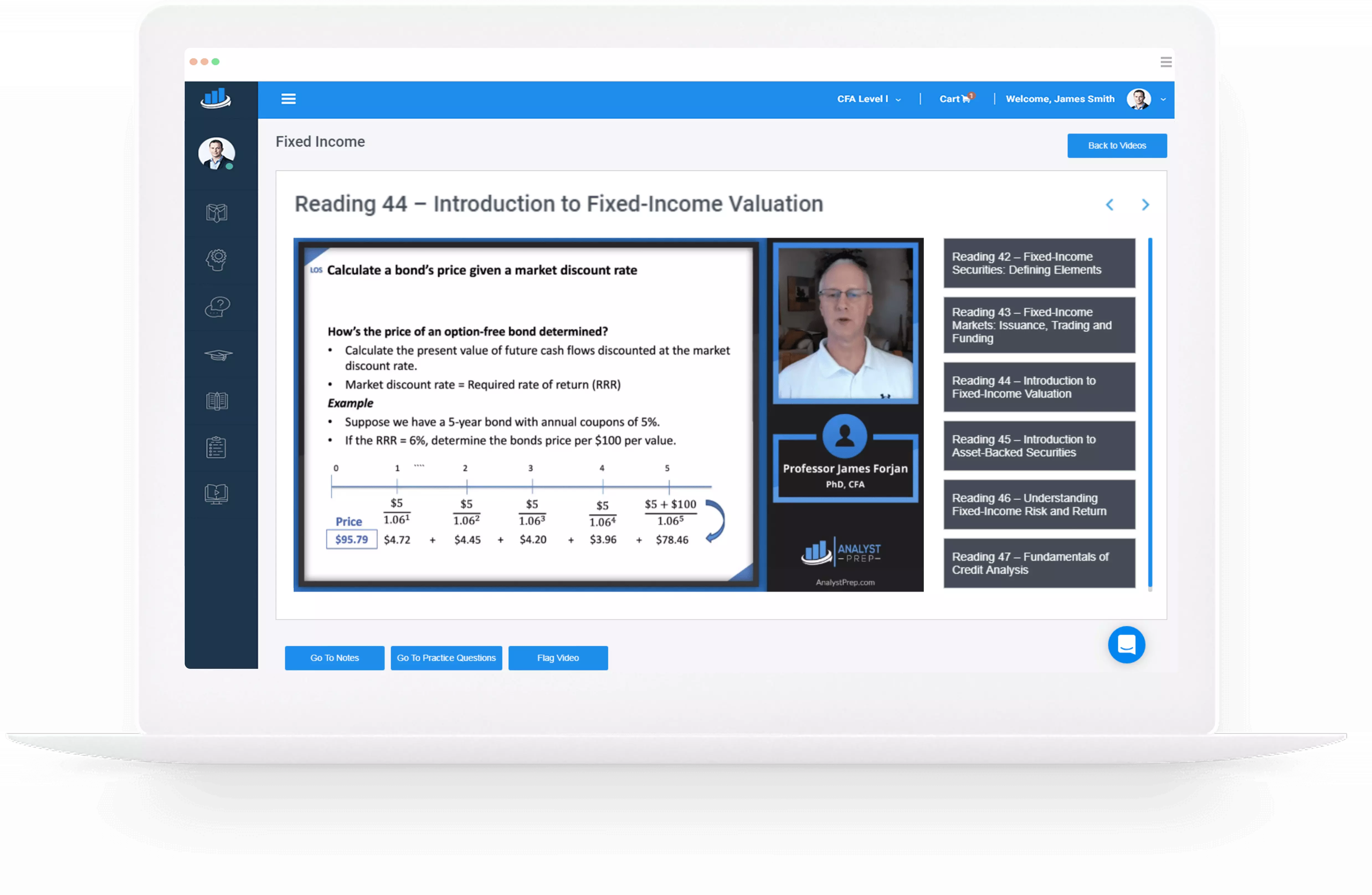
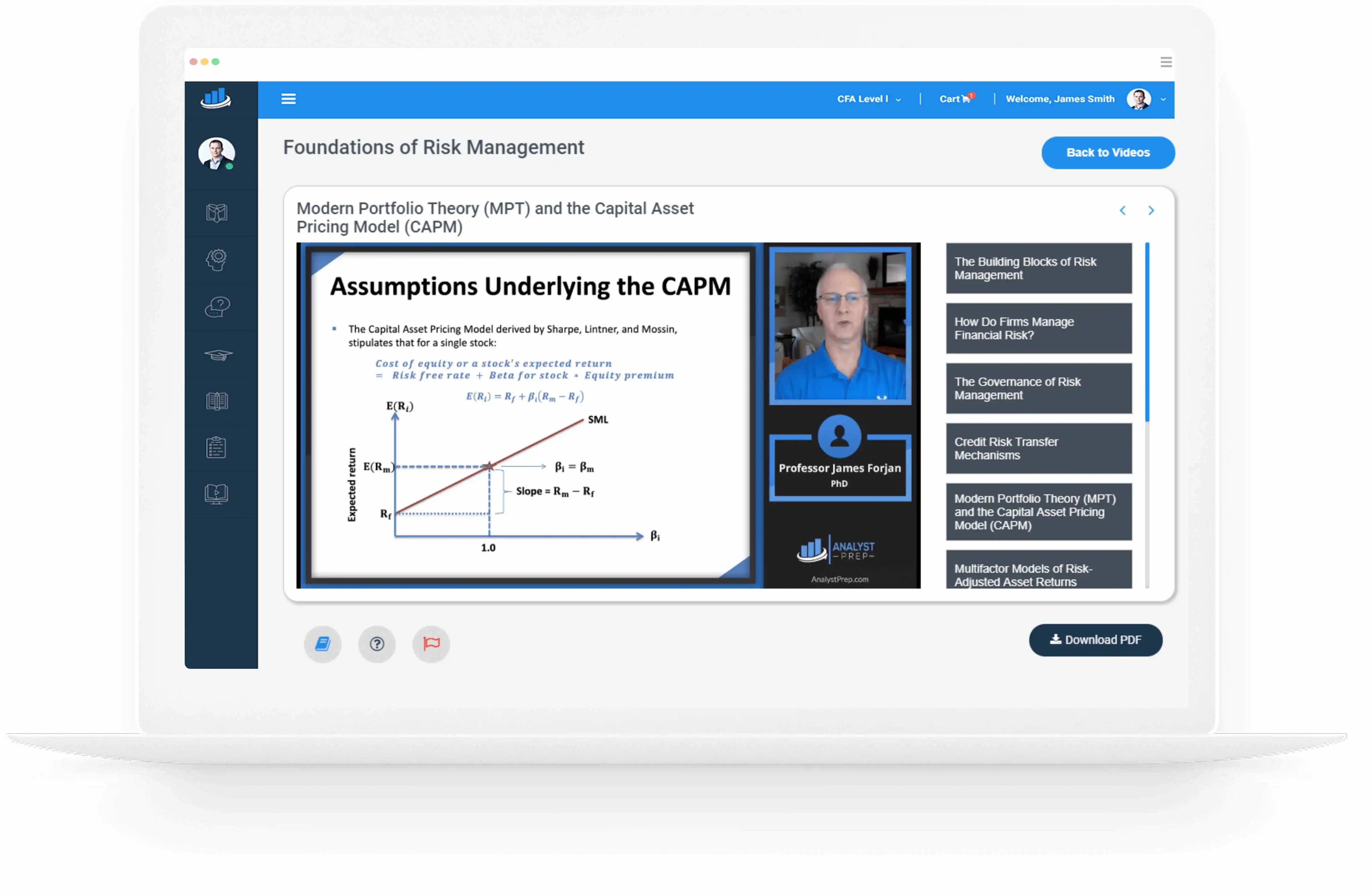
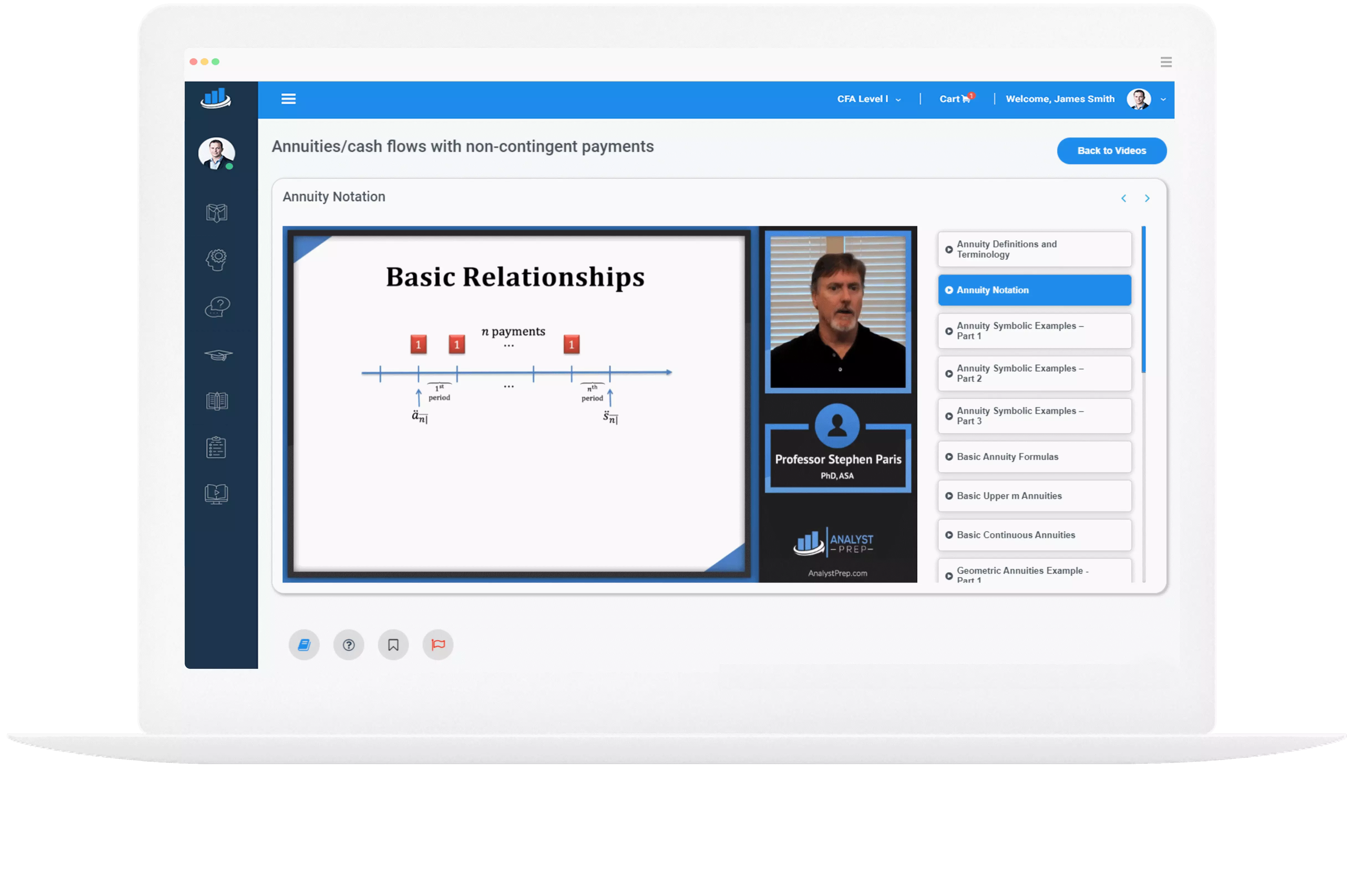
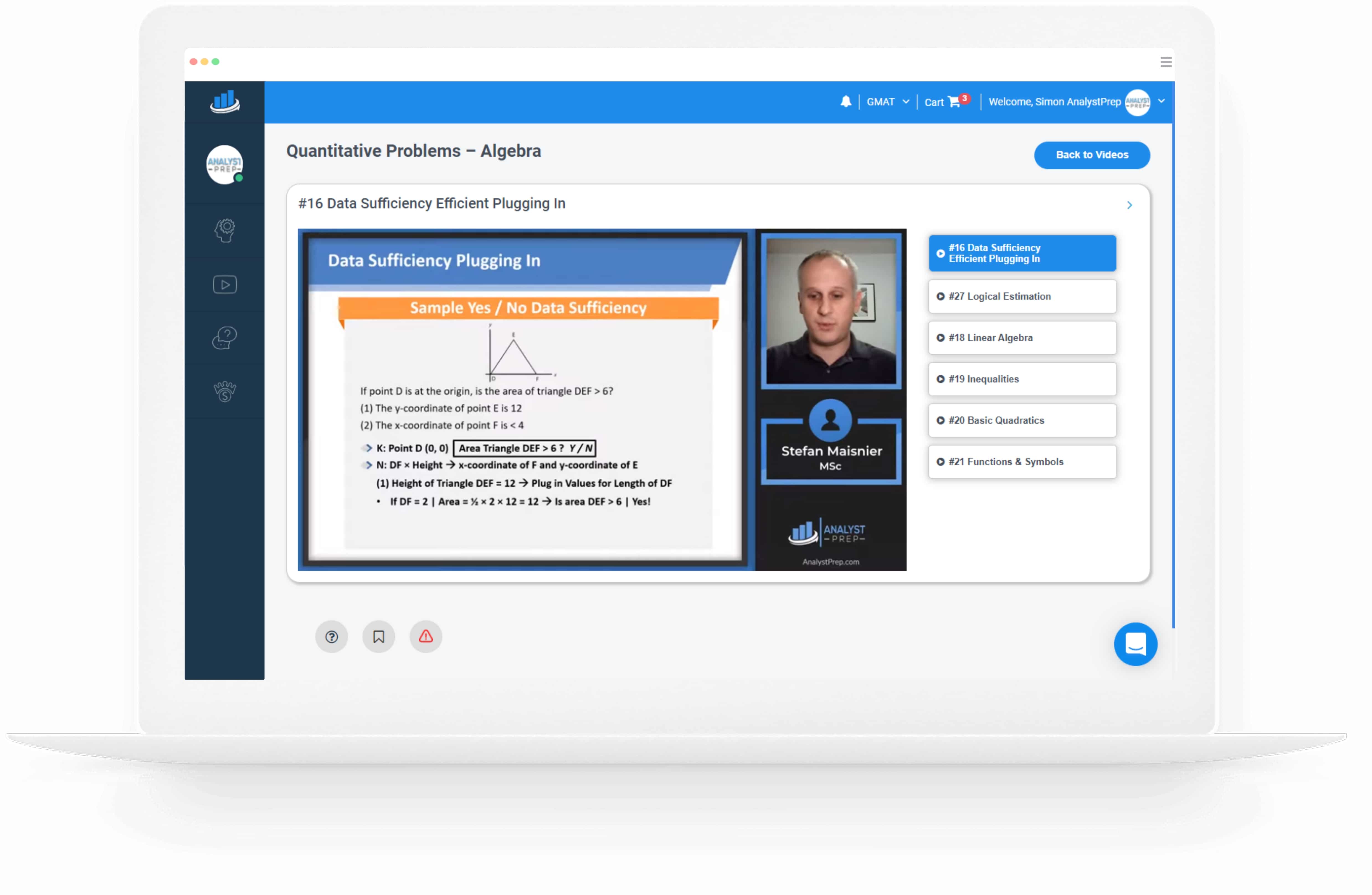
Our video lessons provide visual explanations of difficult concepts and calculations. If you struggle to understand something in the study notes, you can revisit the topic through a video lesson before testing your understanding.
Our QBank allows you to practise questions immediately after completing individual readings or topics. Rather than waiting until you finish the entire curriculum, you can use topic-specific questions to evaluate your understanding as you progress.
Review the explanations after each attempt to understand why an answer is correct, identify mistakes and determine which concepts require additional revision.
Our AI Tutor is trained on our proprietary CFA curriculum content, including our study notes, video lessons and question bank. You can use it to explore difficult concepts, ask follow-up questions and obtain explanations grounded in our learning materials.
Once you have covered sufficient curriculum material, use our mock examinations to evaluate your broader preparation. They help you practise under examination-like conditions, assess your performance and identify areas that need further attention.
You can combine these resources throughout your preparation: learn through our study notes and video lessons, test your understanding with the QBank, clarify difficult concepts with the AI Tutor and evaluate your readiness through mock examinations.
Stop Reading Without Testing Your Knowledge
Combine our study notes, video lessons, practice questions, AI Tutor and mock exams to prepare more effectively.
No. You do not need to finish the entire CFA curriculum before attempting practice questions. A more effective approach is to establish a basic understanding of each topic, attempt related questions and review your answers before moving on. This helps you identify knowledge gaps early and reinforce concepts while they are still fresh.
Start practising CFA questions as soon as you have developed a basic understanding of an individual reading or topic. You can begin with reading-level questions and gradually introduce broader topic-level and mixed-topic questions as your curriculum coverage expands. Timed question sets and mock examinations can come later in your preparation.
Yes, attempting relevant questions after each reading is a useful way to test your understanding. You do not need to complete a large question set every time. Start with questions covering the concepts you have just studied, review the explanations and revisit anything you find difficult before progressing.
There is no fixed number of CFA practice questions that every candidate should complete daily. Your target should depend on the complexity of the topic, available study time and current preparation stage. Focus on understanding the questions, reviewing explanations and correcting mistakes rather than simply maximizing the number of questions attempted.
Both are important because they serve different purposes. Reading and video lessons introduce concepts and help you understand the curriculum, while practice questions test whether you can recall and apply what you have learned. Rather than choosing one over the other, combine them throughout your preparation.
Generally, yes. Start with chapter-wise or reading-level questions to establish your understanding of individual concepts. Once you have covered several readings, introduce mixed-topic questions to test your ability to identify and apply relevant concepts without relying on chapter headings.
Start by understanding why the correct answer is right and why your selected answer was incorrect. Identify whether the mistake resulted from a conceptual misunderstanding, forgotten formula, calculation error or misinterpretation of the question. Revisit the relevant study material and attempt similar questions to confirm that you have corrected the problem.
Introduce mock examinations after covering sufficient curriculum material to make the assessment meaningful. Earlier in your preparation, focus on reading-level and topic-level questions. As the examination approaches, use full-length mocks to assess your overall understanding, practise time management and identify areas requiring additional revision.
Completing the CFA curriculum is an important milestone, but it does not necessarily mean you can recall and apply everything you have studied. Waiting until you finish all the readings before attempting practice questions can leave you with knowledge gaps that are difficult to address later.
Instead, make question practice part of your preparation from the beginning. Study a concept, attempt relevant questions, review your answers and revisit areas where you struggle. As you progress, introduce mixed-topic questions, timed practice and full-length mock examinations to evaluate your readiness.
At AnalystPrep, we provide the resources you need to combine learning with regular practice, including study notes, video lessons, our QBank, AI Tutor and mock examinations.
Stop Reading Without Testing Your Knowledge
Build a more effective CFA study routine with our learning resources and practice questions.
Explore our resources and experience how you can learn, practise and track your preparation in one place.
Improve your CFA exam preparation by combining our study notes, practice questions, and video lessons. Test your understanding as you progress through the readings, identify knowledge gaps, and reinforce key concepts with targeted practice.
Offered by AnalystPrep
Get Ahead on Your Study Prep This Cyber Monday! Save 35% on all CFA® and FRM® Unlimited Packages. Use code CYBERMONDAY at checkout. Offer ends Dec 1st.
