


Can You Pass the CFA® Exam Without ...
A surprising number of CFA candidates have passed their exams without taking a... Read More

The finish line is finally in sight.
The CFA Level 3 August 2026 exam is only days away and chances are you’re feeling a mix of confidence, doubt, excitement and exhaustion.
You may be thinking:
Let’s start with something important.
Almost every Level III candidate feels this way during the final week.
It doesn’t matter whether you’re sitting for Level III for the first time or repeating the exam. The final seven days create a unique kind of pressure. You’ve already invested hundreds of hours studying. You’ve sacrificed weekends, evenings, vacations and social events. Now everything feels like it comes down to a few remaining days.
The good news?
The final week is not about learning everything.
The final week is about converting what you already know into points.
That’s why your strategy now should be very different from your strategy three months ago.
Three months ago, your focus was content coverage.
Today, your focus should be:
In other words, your goal is no longer to become smarter.
Your goal is to become more exam-ready.
This guide will walk you through exactly how to approach the next seven days, what to review, what to stop doing, how to handle CFA Level 3 essay questions, how to manage your time during the exam and how to arrive at the test center feeling prepared rather than overwhelmed.
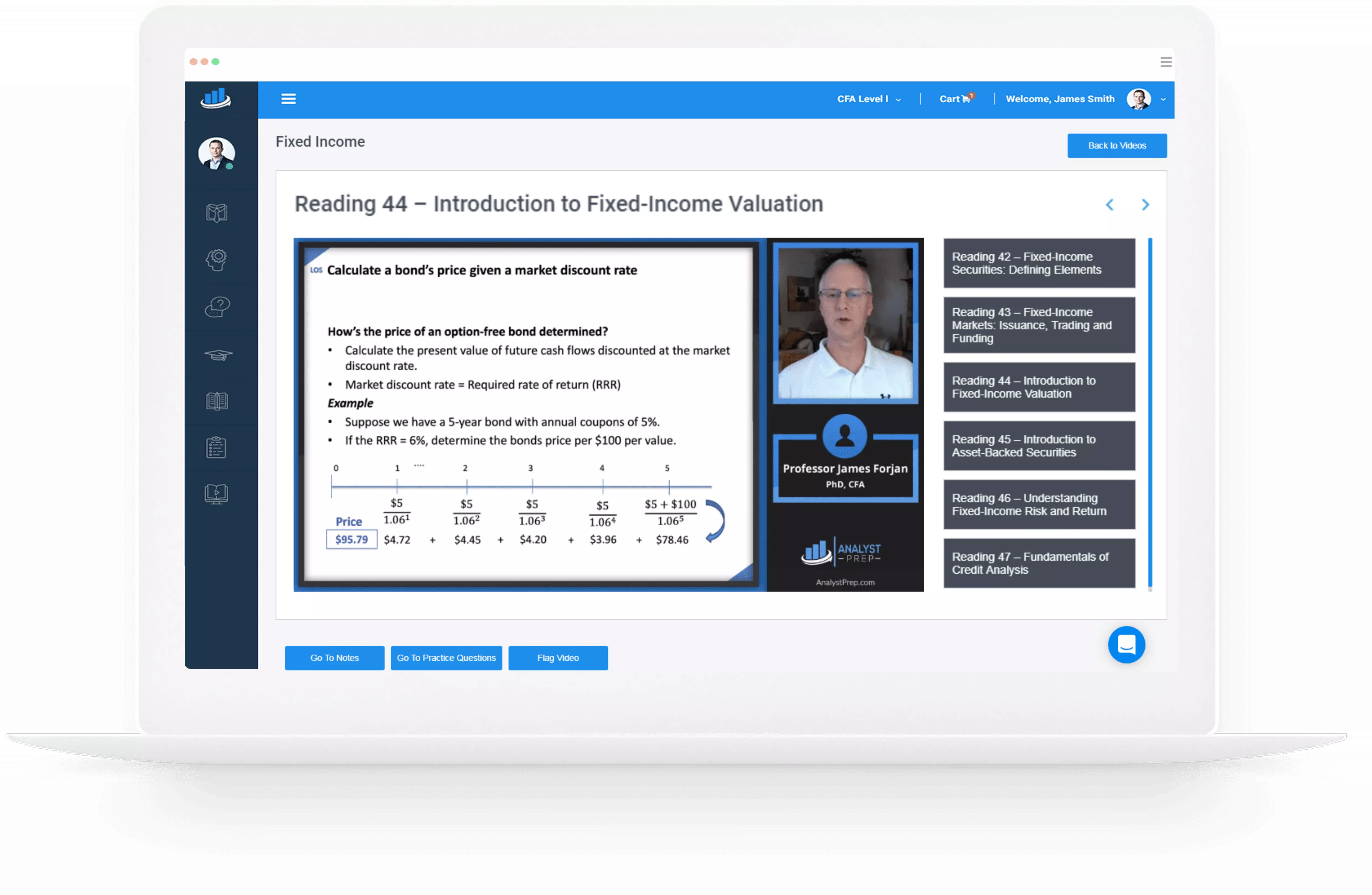
Seven days left? Now is the perfect time to identify weak areas using AnalystPrep CFA Level III mock exams and practice questions before exam day.
The CFA Level 3 exam dates 2026 for the August window are:
August 13 through August 17, 2026
Here is a quick overview of the exam structure.
| Detail | CFA Level III August 2026 |
| Exam Window | August 13–17, 2026 |
| Exam Delivery | Computer-Based Testing |
| Number of Sessions | Two |
| Time Per Session | 132 Minutes |
| Total Testing Time | 4 Hours 24 Minutes |
| Question Types | Item Sets and Constructed Responses |
| Optional Break | Between Sessions |
This matters because Level III is different from Levels I and II.
Success is not only about knowing the content.
Success depends on your ability to communicate decisions, justify recommendations, apply information from vignettes and manage your time under pressure.
Why This Final Week Matters More Than You Think
Let’s be honest.
If you’re still trying to cover large sections of the curriculum, you’re already fighting the wrong battle.
The strongest candidates during the final week aren’t necessarily learning more than everyone else.
They’re making fewer mistakes.
That’s an important difference.
A candidate who fixes three recurring errors can easily outperform a candidate who spends five days rereading entire curriculum sections.
The objective now is precision.
Not volume.
When candidates become anxious, they often fall into the trap of treating every weakness as equally important.
That’s rarely true.
Some weaknesses cost you many points.
Others barely affect your score.
The final week is about identifying the difference.
Priority #1: Fix Repeatable Mistakes
If you’ve taken multiple mock exams, your mistakes are probably trying to tell you something.
Maybe you consistently:
Notice something?
None of those problems require rereading hundreds of pages.
They require awareness.
Here’s a useful exercise.
Pull out your last three mocks and ask yourself:
What mistakes keep showing up?
That’s where your attention belongs.
Because a recurring mistake doesn’t hurt you once.
It hurts you repeatedly.
And that’s exactly why fixing a recurring problem tends to produce an outsized return.
Priority #2: Practice Retrieval, Not Recognition
Many candidates spend the final week reading.
Reading feels productive.
Unfortunately, it often creates a false sense of confidence.
You look at a formula and think:
“Yes, I know that.”
But would you remember it under exam pressure?
That’s a different question.
Level III tests retrieval.
You must produce answers.
You must explain decisions.
You must justify recommendations.
Try:
If you’re wondering what to study before CFA Level 3, active recall should be near the top of the list.
Priority #3: Improve Execution
Many candidates have enough knowledge to pass.
What they lack is efficient execution.
Execution means:
A strong execution strategy can improve your score even when knowledge remains unchanged.
Priority #4: Protect Your Energy
At this stage, sleep is part of your preparation.
So is nutrition.
So is managing stress.
Your brain performs differently when exhausted.
Many final-week candidates still think:
“I’ll sacrifice sleep and gain extra study hours.”
In reality, the opposite often happens.
Late-night studying can reduce:
The final week is not just an academic challenge.
It’s also a performance challenge.
Let’s walk through a practical CFA Level 3 seven-day study plan.
This is not a rigid schedule.
It is a framework.
Adapt it based on:
Seven Days Before the Exam
Take your final full diagnostic mock.
Treat it like the real exam.
That means:
The purpose is not to generate a score.
The purpose is diagnosis.
You want to identify:
Once finished, don’t immediately start another practice session.
Review the mock while your thought process is still fresh.
That review may be more valuable than the mock itself.
Six Days Before the Exam
Analyze every important mistake.
Create an error log.
Do not simply write:
“Got this wrong.”
Instead ask:
Why did I get it wrong?
Common categories include:
Patterns matter.
One random error may mean very little.
Recurring errors deserve immediate attention.
Five Days Before the Exam
Choose only two or three weak areas.
That’s it.
Many candidates attempt to fix ten weaknesses simultaneously.
The result is usually superficial improvement everywhere and mastery nowhere.
Focus instead on:
This becomes your personal CFA Level 3 last-minute study plan.
Four Days Before the Exam
Today is about constructed responses.
Many candidates underestimate how much practice they need.
Spend time:
Don’t measure success by word count.
Measure success by efficiency.
Three Days Before the Exam
Shift into high-speed recall mode.
Review:
Avoid broad reading.
Focus on retrieval.
Two Days Before the Exam
Complete a light mixed practice session.
Then turn your attention to logistics.
Confirm:
Candidates sometimes create unnecessary stress because they neglect logistics.
Don’t be one of them.
One Day Before the Exam
Stop intensive studying.
Seriously.
Review:
Then walk away.
Spend time resting.
Eat familiar meals.
Prepare for tomorrow.
Remember:
The purpose of the final day is readiness, not panic.
If there is one area that separates Level III from the earlier exams, it is the constructed-response format.
That’s why this section matters so much.
These are some of the most important CFA Level 3 constructed response tips you can follow.
Understand What the Exam Is Actually Asking
Many candidates see the phrase “essay question” and immediately imagine long responses.
That’s a mistake.
The exam is not testing your ability to write essays.
It’s testing your ability to solve investment problems.
A prompt may ask you to:
Each task requires a different response.
Read the Command Word First
Understanding CFA Level 3 command words is essential.
Consider the difference:
Identify
Explain
Justify
Recommend
Many candidates understand the content but answer the wrong question.
That’s an expensive mistake.
Answer First, Explain Second
Strong response:
Recommendation: Portfolio A.
Justification: It better satisfies the client’s liquidity requirement while remaining within the stated risk tolerance.
Weak response:
Several paragraphs of theory before eventually revealing the answer.
Your grader should never have to search for your conclusion.
Use Vignette Facts
One of the most important lessons for candidates learning how to answer CFA Level 3 constructed response questions is this:
Use information from the scenario.
Weak answer:
Portfolio A has lower risk.
Stronger answer:
Portfolio A’s lower volatility aligns with the client’s moderate risk tolerance and five-year spending objective.
The second answer demonstrates application.
That’s what Level III rewards.
Keep Responses Concise
The words “constructed response” do not mean “academic essay.”
Avoid:
The best answers are often surprisingly short.
There is no perfect number.
Some candidates benefit from one final simulation.
Others benefit more from reviewing previous mistakes.
If you’ve already completed several CFA Level 3 mock exams, another full mock may offer diminishing returns.
You may be better served by:
On the other hand, if you haven’t completed a full simulation yet, that’s a different story.
You need exposure to the actual exam experience.
Just remember:
The value of a mock comes from the review afterward.
Not the score itself.
Strong CFA Level 3 time management can save an exam that isn’t going perfectly.
Weak time management can damage an otherwise strong performance.
Don’t Chase Perfection
Many candidates take too long trying to perfect one answer.
Meanwhile, easier points wait elsewhere.
Remember:
A good answer submitted on time beats a perfect answer never finished.
Move On When Necessary
If you’re stuck:
Don’t let one difficult question dictate the rest of your exam.
Maintain Pace
Each session lasts 132 minutes.
Stay aware of time throughout.
Don’t assume:
The exam doesn’t care about your preferences.
Stay disciplined.
These CFA Level 3 exam-day tips can eliminate many avoidable problems.
Before leaving for the test center, make sure you’ve:
The goal is simple:
Remove as many unnecessary variables as possible.
Let’s talk about something candidates often ignore.
Your body.
The exam doesn’t only test knowledge.
It tests performance.
Start adjusting your sleep schedule now.
Eat familiar foods.
Stay hydrated.
Maintain normal caffeine habits.
Don’t attempt to become a different person the day before the exam.
Consistency beats experimentation.
Here are mistakes that appear in every exam cycle.
Perhaps the most dangerous mistake is this:
Treating one difficult question as proof that you’re failing.
It isn’t.
Difficult questions are part of the exam.
Keep moving.
Keep collecting points.
Keep your routine simple.
Wake up with enough time to avoid rushing.
Eat a familiar breakfast.
Review a few formulas if it helps.
Check your calculator.
Check your identification.
Leave early.
Avoid online discussions.
Avoid new material.
Avoid panic.
And remember:
Feeling nervous does not mean you’re unprepared.
It means the exam matters.
Before walking in, remind yourself:
That’s your final mental checklist.
During the final week, simplicity matters.
Useful resources include:
Practice full exam conditions and identify weaknesses.
CFA Level III Practice Questions
Target weak areas efficiently.
Review key concepts without rereading entire readings.
CFA Level III Formula Sheet
Support rapid recall during the final days.
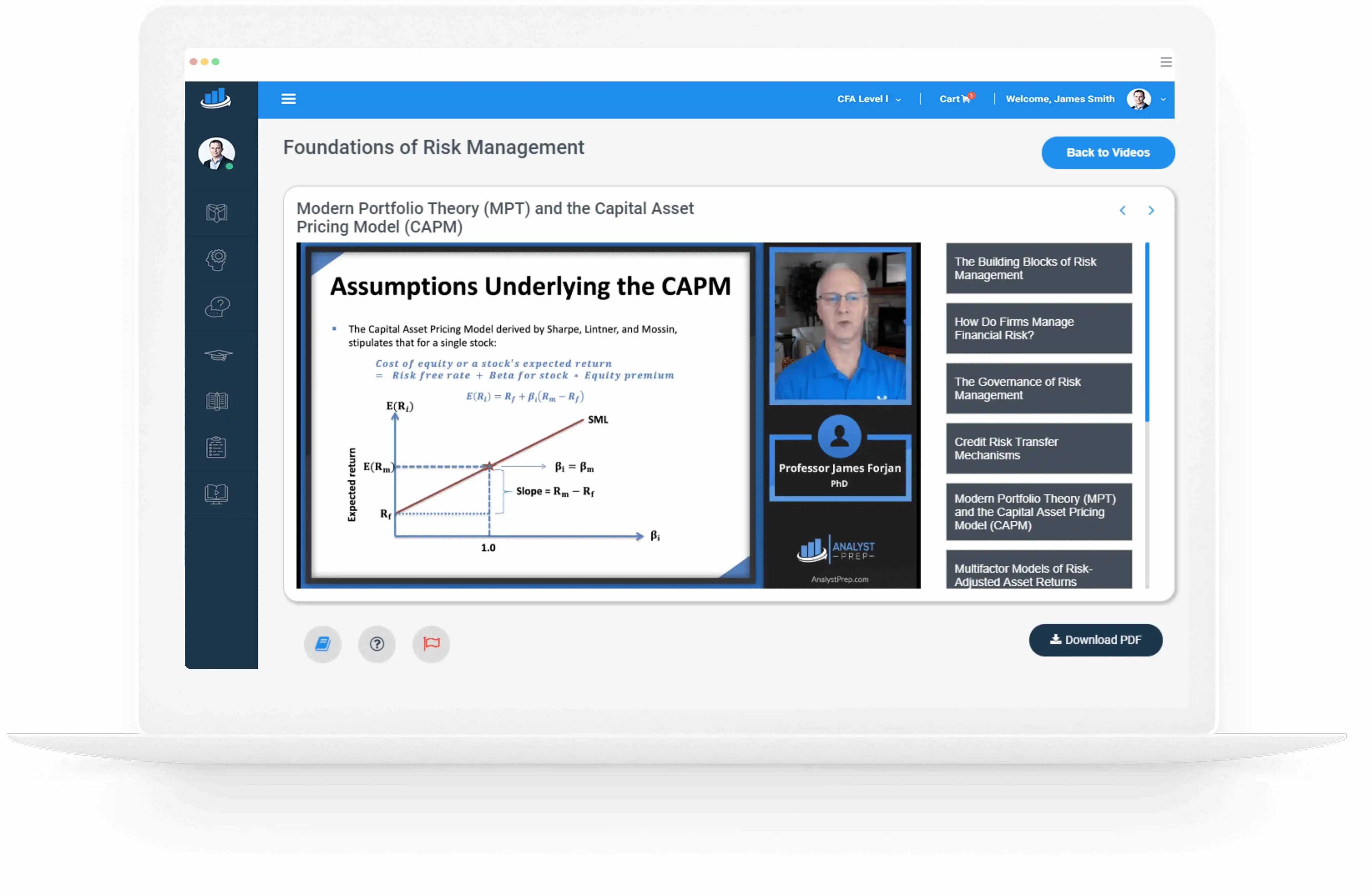
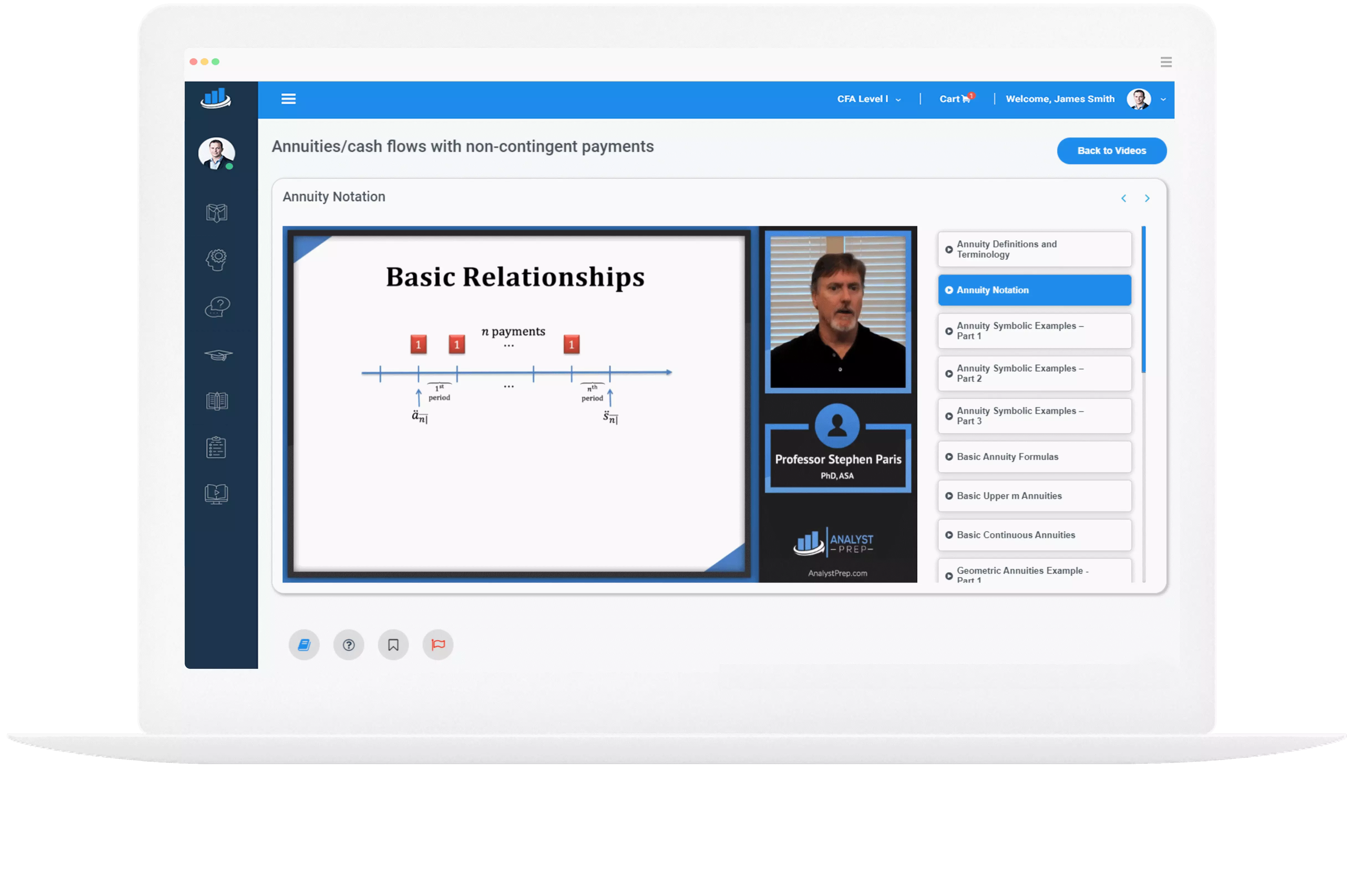
AnalystPrep CFA Level III Complete Course
Access mocks, videos, notes, formulas, and practice questions in one place.
Let’s finish where we started.
The final week is not about mastering everything.
It’s about performing well with what you already know.
Focus on:
Trust the work you’ve already done.
Stay calm.
Stay disciplined.
And remember:
You do not need a perfect exam.
You need an effective one.
When is the CFA Level III August 2026 exam?
The CFA Level 3 August 2026 exam window runs from August 13 through August 17, 2026. Your exact test date depends on the appointment you selected when scheduling your exam. This is the time to double-check your appointment details, test-center location, travel arrangements and reporting time. Candidates who wait until the final day to verify logistics often create unnecessary stress that could have been avoided.
What should I study one week before CFA Level III?
If you’re wondering what to study before CFA Level 3, focus on activities that directly improve performance. Review your mock-exam mistakes, revisit frequently forgotten formulas, practice constructed responses, spend time on command words, and reinforce high-impact weak areas. This is not the time to reread the entire curriculum. The candidates who gain the most during the final week are usually the ones correcting recurring errors rather than trying to learn everything.
Should I take a CFA Level III mock exam during the final week?
Usually, yes. A final mock can be extremely valuable if it is completed early enough to allow a thorough review afterward. However, the mock itself is only half the process. The real value comes from understanding why you got questions wrong, identifying patterns in your mistakes, and making adjustments before the actual exam. If you’ve already completed multiple mocks, targeted review may be a better use of time than another full simulation.
How many CFA Level 3 mock exams should I complete before the exam?
There is no universal answer. Some successful candidates complete two or three mocks, while others complete many more. What matters is whether you understand the CFA Level 3 exam format, can manage your time, and have identified your recurring weaknesses. Taking ten mocks without reviewing them is far less valuable than taking three and deeply analyzing each one.
How should I answer CFA Level III constructed-response questions?
The best approach is simple. State your answer first, then support it. Many candidates reverse the process and waste valuable time. When learning how to answer CFA Level 3 constructed response questions, focus on being direct, using relevant facts from the vignette, following the command word, and keeping responses concise. Remember that graders are looking for correct reasoning and application, not elegant writing.
Are CFA Level III constructed responses the same as essays?
No. Although many candidates refer to them as CFA Level 3 essay questions, you are not expected to write traditional essays. In most cases, concise and focused responses are preferable. A few well-written sentences supported by vignette facts are often stronger than lengthy explanations filled with irrelevant information.
What are the most important CFA Level 3 command words to know?
Some of the most common CFA Level 3 command words include identify, explain, justify, calculate, determine, recommend, compare, and contrast. Understanding these command words is critical because they tell you exactly what the grader expects. A candidate can know the material and still lose points by answering a different question from the one asked.
What are the best CFA Level 3 exam-day tips?
The most useful CFA Level 3 exam-day tips are surprisingly simple. Arrive early. Don’t rush. Read every question carefully. Pay attention to command words. Keep track of time. Avoid overexplaining answers. Use facts from the vignette. Most importantly, don’t let one difficult question affect the rest of your exam. A difficult start does not mean a difficult finish.
When should I stop studying before the exam?
Most candidates should stop intensive studying by the evening before the exam. A brief formula review is fine. Looking at your error log is fine. Trying to learn an entirely new reading at midnight is usually not. The goal on the final day is to arrive rested, focused, and confident rather than mentally exhausted.
What should I do if I perform poorly on my final mock exam?
Don’t panic. Seriously. A disappointing mock score does not decide your exam result. Instead of focusing on the overall score, focus on the reasons behind it. Did you struggle with time management? Misread command words? Make careless errors? Forget formulas? Many final-week weaknesses are fixable. Use the mock as a diagnostic tool, identify the areas causing the most damage, and direct your remaining energy there. One mock score does not define your future performance.
Make your final CFA Level III preparation more effective with study notes, practice questions, mock exams, formula reviews, and exam-focused resources designed to help you fix weak areas and improve execution.
Offered by AnalystPrep






A surprising number of CFA candidates have passed their exams without taking a... Read More

The CFA institute postponed the June exams and cancelled the December 2020 exams... Read More

Get Ahead on Your Study Prep This Cyber Monday! Save 35% on all CFA® and FRM® Unlimited Packages. Use code CYBERMONDAY at checkout. Offer ends Dec 1st.