


The Impact of AI in the CFA® World: W ...
Introduction: Rethinking What AI Really Challenges The most important conversations about AI in... Read More

You have just finished a CFA mock exam. You check your score, look at the questions you missed and try to work out whether you are making progress. Perhaps the result is encouraging. Perhaps it is lower than you expected.
Either way, what you do next matters.
Some candidates spend a few minutes checking the answers before returning to their study notes. Others immediately start another mock, hoping to get a better score. Both approaches can leave important questions unanswered. Why did you miss certain questions? Which topics are giving you trouble? Were your correct answers based on sound reasoning or a lucky guess?
Your mock exam results can tell you a great deal about your preparation but you have to examine them properly.
Learning how to review a CFA mock exam is just as important as finding time to take one. A good review helps you understand where you are losing marks, what needs more attention and how to use your remaining study time.
This guide explains how to approach a CFA mock exam review, examine your mistakes and build a study plan around your actual performance. We also look at how the process differs for Level I, Level II and Level III candidates.
Completing a mock exam gives you an opportunity to test your knowledge under timed conditions. Reviewing it helps you understand how well you used that knowledge.
Consider a candidate who scores 65%. The result suggests there is room for improvement but it does not explain what went wrong. Perhaps the candidate struggled with Fixed Income calculations. Maybe they understood the material but misread several questions. They might also have spent too long on difficult questions and rushed through the remaining ones.
Each problem calls for a different response.
This is why CFA mock exam analysis should go beyond the overall percentage. Your review should help you identify the reasons behind your performance.
A proper review can help you
CFA Institute recommends using practice questions to assess your understanding of individual topics and mock exams to practise pacing and evaluate your preparation. Its mock exams and practice questions guidance explains how candidates can use these resources during their studies.
A disappointing score does not necessarily mean you need to start the curriculum again. You may only need to address a few specific weaknesses. Your review should help you find them.
Start with your performance report. Record your overall score but pay particular attention to how you performed in individual curriculum topics.
An overall score can hide some serious weaknesses. You might perform well in Ethics and Quantitative Methods but struggle with Financial Statement Analysis and Fixed Income. If you only look at your total percentage, you may not notice how much work those weaker areas need.
Record the following information
If you have taken several mocks, compare your results. A topic that has consistently caused problems deserves more attention than one where you made a single mistake.
Also consider the curriculum weight of each topic. A weakness in a heavily weighted area may have a greater effect on your performance. However, do not ignore foundational concepts simply because they belong to a smaller topic. Some concepts appear in different parts of the curriculum and can affect your performance elsewhere.
How to Identify Your Weakest CFA Topics
You do not need complicated software to identify your weak areas. A simple spreadsheet will do.
List the curriculum topics for your exam level. Record the number of questions attempted in each topic and how many you answered correctly. Calculate your accuracy rate and flag the areas where you struggled.
Consider this illustrative example.
| Topic | Accuracy | Main concern | Initial priority |
| Financial Statement Analysis | 55% | Repeated conceptual errors | High |
| Fixed Income | 68% | Calculation mistakes | High |
| Ethics | 82% | Occasional misinterpretation | Moderate |
| Derivatives | 75% | Slow question completion | Moderate |
These figures are examples, not recommended pass thresholds. Your priorities should depend on your performance, the weight of each topic and the time remaining before your exam.
You should also look beyond accuracy. A candidate who scores 75% but takes twice as long as expected to answer questions may have a different problem from someone who scores the same percentage but works comfortably within the time limit.
Once you have identified your weaker topics, examine the individual questions to understand why you lost marks.
This is where you need to spend some time.
Do not simply open the answer key, read the correct answer and move on. Try to remember how you approached the question. What led you to select your original answer? Did you understand the concept? Did you overlook something? Were you unsure which formula to use?
Your CFA practice exam review should help you understand the thinking behind each answer, especially the incorrect ones.
How Should You Review Incorrect CFA Practice Questions?
Start by asking yourself what went wrong.
Be honest about your mistakes. It is easy to blame a difficult question when the real problem is that you did not understand the concept.
Suppose you miss a bond valuation question. After checking the explanation, you discover that you used the wrong discount rate. Do not stop there. Find out why you selected that rate. Did you misunderstand the relationship between the required yield and the bond’s cash flows? Did you overlook information in the question? Or had you simply forgotten which rate to use?
The answer will determine what you need to revise.
Make Sure You Understand the Correct Answer
Reading an explanation does not automatically mean you understand it.
After reviewing the solution, close the answer key and try the question again. If it involves a calculation, work through the steps yourself. If it tests a concept, explain the underlying principle in your own words.
You should be able to explain why the correct answer is right and why the other options are wrong.
If you cannot do that, return to the relevant study notes or lesson. Then attempt another question on the same concept.
This is particularly important when reviewing CFA practice questions that involve formulas or several steps of reasoning. Recognizing a familiar solution while reading an explanation is not the same as solving the problem independently.
Should You Review Correct Answers on a CFA Mock Exam?
Absolutely. A correct answer does not always mean you understood the question.
You may have eliminated two options and guessed between the remaining choices. You may have remembered a formula without knowing when to apply it. You may even have arrived at the right answer through faulty reasoning.
These are not signs of mastery.
Go back to questions you answered with little confidence. Explain why the correct option works and check whether you can apply the same concept to a different question.
If you cannot, include the question in your revision plan. It is better to discover a gap during practice than to assume you understand a topic and encounter the same problem in the actual exam.
After examining your answers, group your mistakes according to their causes.
This makes it easier to decide what kind of revision you need. Reading another chapter may help with a knowledge gap but it will not necessarily fix poor time management or repeated calculator errors.
Use these six categories as a starting point.
| Error category | What happened | What you should do |
| Knowledge gap | You did not understand or remember the concept | Revisit the relevant study notes and work through examples |
| Application error | You understood the concept but applied it incorrectly | Practice questions that test the concept in different situations |
| Calculation error | You used the wrong formula, inputs or calculator steps | Rework the calculation and practice similar problems |
| Reading or interpretation error | You missed an important detail or misunderstood the question | Practice identifying the information needed before answering |
| Time-management error | You spent too long on a question or ran out of time | Complete timed practice and work on your pacing |
| Guess or low-confidence answer | You selected the correct answer without sound reasoning or were unsure of your approach | Revisit the concept and test yourself with fresh questions |
Some questions may involve more than one type of mistake. You might overlook a detail in a vignette and then apply the wrong formula. Record the main problem and note any secondary issue.
The distinction matters. If you repeatedly misunderstand questions, more formula practice may not solve the problem. If you understand the material but make calculation errors, rereading the entire topic may be an inefficient use of your time.
Keep a CFA Mock Exam Error Log
An error log gives you a record of the mistakes you make and the work you do to correct them. It also helps you notice when the same problem keeps appearing across different mock exams.
You can use a spreadsheet, notebook or any tracking tool you find convenient.
| Information | What to record |
| Topic | The curriculum topic and relevant reading |
| Question reference | The mock exam and question number |
| Original answer | The answer you selected |
| Correct answer | The correct option or response |
| Error category | Knowledge, application, calculation, interpretation, timing or guess |
| What went wrong | A short explanation of the mistake |
| Correct reasoning | The concept, formula or approach you should have used |
| Corrective action | What you intend to do about the weakness |
| Follow-up result | Whether you can now answer a similar question correctly |
Keep your explanations short and specific. You do not need to rewrite the entire solution.
For example, instead of writing “I need to improve Fixed Income”, record “Used the wrong discount rate when calculating bond value. Review the relevant formula and complete ten similar questions.”
That gives you something concrete to work on.
You have identified your weak topics, reviewed your answers and classified your mistakes. Now, you need to decide what to do about them.
This is where your CFA exam study plan should begin to take shape.
Avoid vague tasks such as “study Ethics” or “revise Fixed Income”. They do not tell you which concepts need attention or how you will know when you have improved.
Your study tasks should be specific enough to guide an actual study session.
| Weakness identified | Vague task | Better study task |
| Incorrect bond valuation calculations | Review Fixed Income | Rework five missed bond valuation questions, review the relevant formulas and complete ten similar questions |
| Misinterpreting Level II item sets | Practise Level II | Complete three timed item sets and record questions where you overlooked relevant vignette details |
| Uncertain Ethics answers | Study Ethics | Review the relevant standards, explain five missed answers and complete a fresh question set |
These examples show how to turn observations into work you can complete and measure.
Decide Which Weaknesses Deserve Attention First
You may have several areas to work on but you probably cannot give all of them equal attention.
Consider four things when setting priorities.
How often the mistake occurs. A problem that appears in several mock exams deserves more attention than an isolated error.
The importance of the topic. Consider the topic’s weight in your exam but do not ignore foundational concepts that affect other areas.
How widely the weakness affects your performance. A gap in a basic concept may cause problems in several readings. Correcting it could improve your performance beyond one topic.
The time available. Be realistic about what you can improve before your exam. Spend your time on weaknesses that need attention and can reasonably be addressed.
This is how to build a useful CFA weak areas study plan. You are not trying to give every topic equal study time. You are deciding where your effort is most needed.
Divide Your Study Time According to Your Needs
Once you have ranked your weak areas, decide how much time to give each one.
Suppose you have ten hours available before your next mock. You might divide the time this way.
| Activity | Example allocation |
| Review the two most serious knowledge gaps | 40% |
| Complete targeted practice questions | 30% |
| Revisit the error log and retest previous mistakes | 20% |
| Complete mixed practice and check progress | 10% |
These percentages are illustrative, not an official CFA Institute recommendation. Your allocation will depend on your results, exam level and remaining study time.
If you have serious gaps in several topics, you may need to spend more time reviewing the curriculum. If you understand most concepts but struggle to apply them, targeted practice should take up more of your schedule.
Keep some time for mixed practice as well. You need to recognize and apply concepts without knowing in advance which topic a question tests.
The general review process applies to all three CFA levels but the questions are different. Your review should reflect what each examination requires.
CFA Level I Review
Level I uses multiple-choice questions to test your understanding of the curriculum. Your review should focus on whether you know the concepts and can apply them correctly.
Pay attention to the following.
For example, if you repeatedly miss hypothesis testing questions, memorizing the formulas may not be enough. You need to understand which test applies, how to interpret the results and what the question is asking you to determine.
Also practice mixed questions. Answering questions immediately after studying a topic is different from recognizing the same concept when it appears among questions from several other areas.
CFA Level II Review
Level II requires you to interpret information presented in vignettes and apply your knowledge to the circumstances described.
When reviewing an item set, examine how you used the information in the vignette. Did you overlook a relevant detail? Did you make an assumption that the case did not support? Did you understand the question but fail to connect it to the information provided?
You should also examine the time spent on each item set. Spending too long on one vignette can leave you rushing through the remaining questions.
Our guide to CFA Level II vignette strategy offers further guidance on approaching item sets.
CFA Level III Review
Level III includes constructed-response questions as well as item sets. Your review should examine both your technical understanding and how well you answered the questions.
For constructed responses, check whether you followed the command word. If the question asked you to recommend, justify, determine or calculate something, did your answer do exactly that?
Also check whether you addressed every part of the question. If you made a recommendation, did you provide the required reasoning? If the question required a calculation, did you use the appropriate method and arrive at the correct result?
Compare your responses with the marking guidance and identify what you left out. Simply reading the model answer will not tell you whether you can produce a complete response yourself.
For item sets, examine your interpretation of the vignette and the reasoning behind each answer.
Our CFA Level III final-week preparation guide provides additional preparation advice.
After reviewing your mistakes and studying the relevant material, return to practice questions.
You need to establish whether your revision has worked. Reading a chapter or watching a lesson does not automatically mean you can apply what you have learned.
Use fresh questions whenever possible. Repeating a familiar question can produce a better score simply because you remember the answer.
Suppose you struggled with bond valuation in your last mock. You revisit the relevant material and complete ten new questions on the topic. If you can solve them correctly and explain your calculations, you have a good indication that your understanding has improved.
If you continue making the same mistakes, spend more time on the underlying concept. You may need to revisit the material, work through additional examples or seek another explanation.
Update your error log with the results. Record which problems you have resolved and which ones still need attention.
Taking another mock makes more sense once you have addressed at least some of the weaknesses revealed by the previous one.
There is no fixed number of days that works for every candidate. Your review time depends on your performance, the number of mistakes you made, the difficulty of those mistakes and how much time remains before your examination.
A candidate who understands most of the material but makes occasional calculation errors may need less time than someone with gaps across several topics.
Rather than follow an arbitrary schedule, organize your review around the work you need to complete.
You could use the first session to examine your score report and identify weak topics. Spend the next session reviewing incorrect and uncertain answers. Then classify your mistakes, update your error log and revisit the relevant study material.
Use the following sessions for targeted practice and retesting. Before taking another mock, check whether you have made progress on the weaknesses identified in the previous one.
If your exam is approaching, be selective. Give more attention to recurring mistakes and important knowledge gaps. You may not have enough time to revisit every topic, so concentrate on the areas where additional work is most useful.
Taking another mock can feel productive but it is not necessarily the best use of your time if you have not reviewed the previous one.
Even candidates who take several mocks can make poor use of their results. Watch out for these habits.
Looking only at the overall score. Your total percentage does not tell you which topics need attention. Examine your performance by topic and review individual questions.
Reading explanations without reworking questions. You may understand a solution while reading it but struggle to reproduce the reasoning independently. Work through the question again without looking at the answer key.
Ignoring correct guesses. A lucky answer can hide a gap in your understanding. Review questions you answered without confidence.
Giving every topic the same amount of time. Some weaknesses are more serious than others. Prioritize recurring errors and concepts that affect your understanding of other areas.
Rereading the curriculum without a clear objective. If your error log identifies a specific problem, concentrate on that area rather than starting an entire reading again.
Taking mock after mock without addressing recurring errors. More practice will not help much if you keep making the same mistakes. Review each mock before moving on to the next.
Treating one score as a prediction of your actual exam result. A single mock cannot guarantee success or failure. Look at your performance across different practice sessions.
Failing to update your study plan. Your priorities may change as you improve. Review your error log regularly and adjust your revision schedule when necessary.
What should I do after taking a CFA mock exam?
Review your performance before taking another mock. Start with your overall score and topic-level results. Then examine incorrect answers, correct guesses and questions that took too long. Identify the reasons behind your mistakes and use them to plan your next study sessions.
How do I analyze my CFA mock exam score?
Look beyond the overall percentage. Examine your accuracy in each curriculum topic, the number of questions you missed and how confident you were in your answers. Compare the results with previous mocks to identify recurring weaknesses. Also consider whether timing affected your performance.
How should I review incorrect CFA practice questions?
First, establish why you selected the wrong answer. Check whether the problem involved an unfamiliar concept, incorrect application, a calculation error or misinterpretation of the question. Then study the correct solution and try a similar question without looking at the answer key.
How do I identify weak topics from a CFA mock exam?
Record the number of questions you attempted and answered correctly in each topic. Calculate your accuracy rate and look for areas with repeated mistakes or low-confidence answers. Compare your results across several mocks where possible and consider the weight of each topic in your examination.
How can I improve my CFA mock exam score?
Find out why you are losing marks rather than simply taking more mocks. Review unfamiliar concepts, practice applying them and work on calculation accuracy, question interpretation and pacing. Use an error log to track recurring problems and check whether your corrective study is working.
How many days should I spend reviewing a CFA mock exam?
There is no standard number of days. The time depends on how many mistakes you made and how much work is needed to correct them. Allow enough time to review the questions, revisit difficult concepts and complete targeted practice before taking another mock.
Should I review correct answers on a CFA mock exam?
Yes. Pay particular attention to questions you answered by guessing or with low confidence. A correct answer does not necessarily mean you understood the concept. Explain the reasoning behind the answer and test yourself with a fresh question.
How do I create a CFA study plan from mock exam results?
Start by listing your weak topics and classifying the mistakes you made. Rank the weaknesses according to how often they occur, their importance and the time available. Turn each weakness into a specific study task with a way to measure improvement. Allocate your study hours according to those priorities.
Why am I getting CFA mock questions wrong?
You may have gaps in your knowledge or understand a concept without knowing how to apply it. You could also be misreading questions, overlooking vignette details, choosing the wrong formula or making calculation errors. Review your mistakes to establish which problem affects you most.
How should I track mistakes across multiple CFA mock exams?
Keep an error log that records the topic, question reference, type of mistake, reason for the error and corrective action. Update it after every mock. Look for problems that keep appearing and record whether your subsequent practice has helped you resolve them.
How should Level II candidates review vignette-based questions?
Examine how you used the information in each vignette. Check whether you overlooked relevant details, made unsupported assumptions or struggled to apply the appropriate concept. Also review the time spent on each item set and practice similar questions under timed conditions.
How should Level III candidates review constructed-response answers?
Compare your responses with the marking guidance. Check whether you followed the command word, addressed every part of the question and included the required explanation or calculation. Identify what was missing and practice writing a complete response to a fresh question.
Your mock exam results should influence how you prepare for the next one. If you keep losing marks in the same topics, you need to change how you approach those areas.
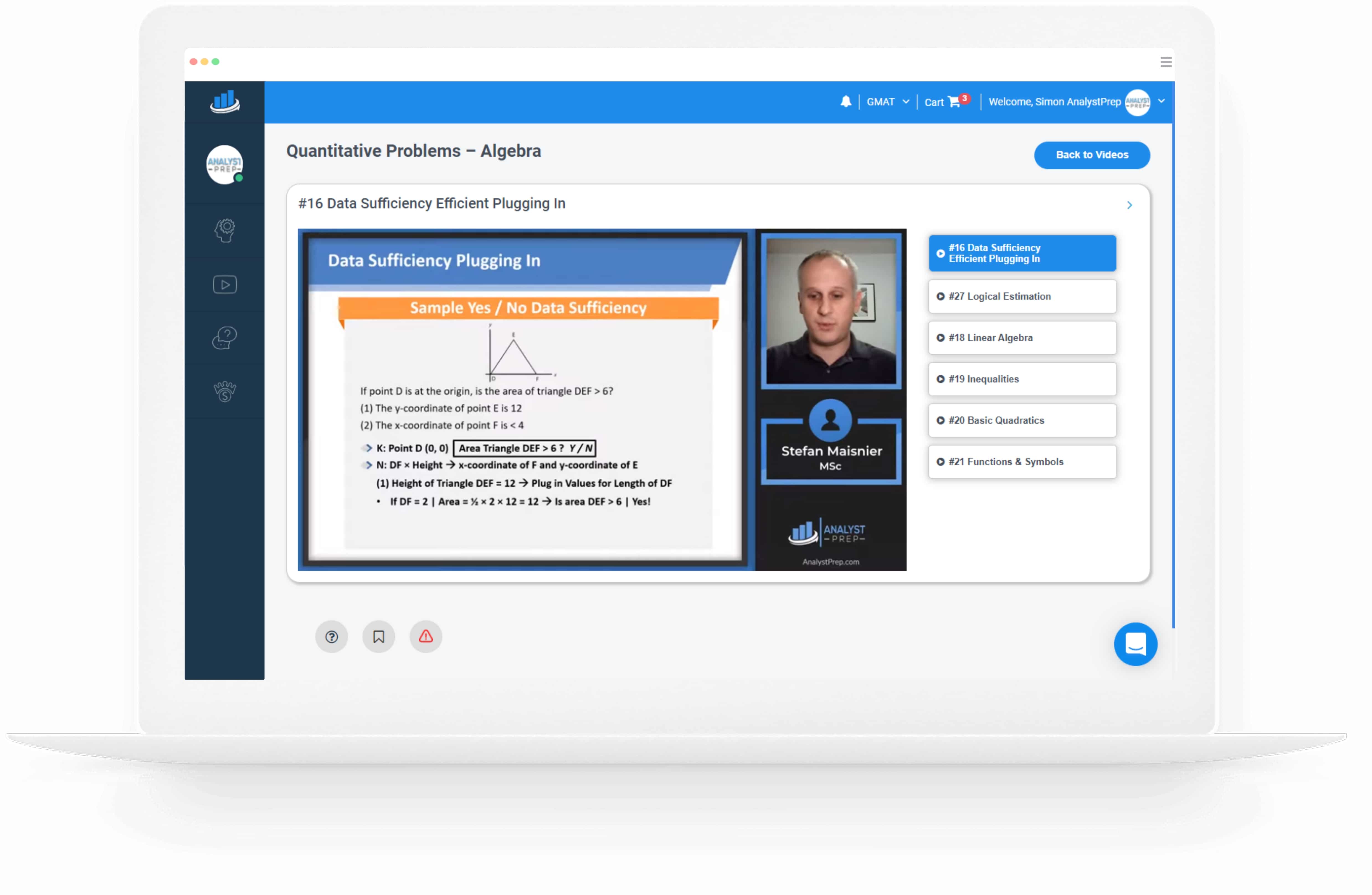
AnalystPrep provides CFA candidates with study notes, practice questions and mock exams to support their preparation. You can revisit difficult concepts, practice questions on specific topics and use your results to monitor your progress.
Our AI Tutor can also help explain concepts you find difficult as you work through your practice questions.
You do not need to spend every study session taking another full mock. If Fixed Income calculations are giving you trouble, spend time working through them. If you struggle with vignette interpretation, practice reading the information carefully and connecting it to the question. If you keep forgetting important concepts, revisit the relevant study material before attempting more questions.
Use each mock to find out what needs attention. Keep a record of your mistakes, work on the underlying problems and check whether your revision has made a difference.
When you take your next mock, you should have a clearer idea of what has improved and what still needs work. That is a much better measure of progress than simply hoping for a higher score.
Offered by AnalystPrep


Introduction: Rethinking What AI Really Challenges The most important conversations about AI in... Read More

There’s no getting around it, financial reporting and analysis is a big part... Read More

Get Ahead on Your Study Prep This Cyber Monday! Save 35% on all CFA® and FRM® Unlimited Packages. Use code CYBERMONDAY at checkout. Offer ends Dec 1st.
